Archive Page 6

constant vigilance

When my dad unexpectedly died eight years ago, he left me with a lifetime of memories and a handful of his possessions. Probably the most treasured of his things are the dozen or so carefully chosen books that now reside on my shelves. My dad was a big underliner. I love that glimpse into his brain when I stumble across passages that intrigued him.
The garish orange jacket that I incessantly tried stealing from him as a teenager now hangs in my closet legitimately. The thrill is gone and it truly is an ugly jacket. But that hardly seems to matter. I still wear it.
pals eyeglasses
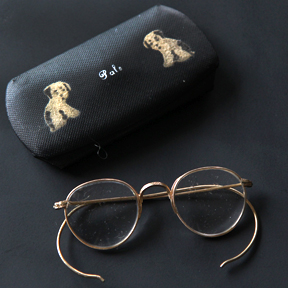
I have his first pair of eye glasses as a kid. They are in a little hard case with two black and white puppies on it. You can tell that at one point the dogs were fuzzy. In small silver script between the dogs is the word “Pals.” My father and I had a lot in common, but our terribly bad eye sight was a bond that ran deep. I keep his glasses along with my first pair of glasses in an old coffee cup that he and I traded back and forth as a joke for years.
The jar of marbles that he used as slingshot ammunition to scare the crows and deer from his tart cherry orchard sits on my desk. Lucky for the wildlife population he was a lousy aim. I declined to take the actual slingshot, because his jar of colorful marbles is all I need to recall his pluck and persistence.
And I also inherited some living things. Shortly before he died, a hazelnut farmer from southeast Minnesota had arranged to send my dad a half dozen hazelnut shrubs as a gift the following spring. My mom told me she would have them sent to me instead. I had all but forgotten about it, until an oversized envelope arrived the next spring with six bare little wisps. It actually took me a minute to figure out what they were.
hazelnut-bush
I headed out with my hazelnut sticks on a windy spring day, and for lack of a plan, stuck them in a temporary nursery bed in the garden. In the seven years since, they have been transplanted more often than any living thing deserves. I finally realized it was time to quit moving them when I had to hire a high school kid for the heavy digging and lifting.
But after all these years of putting up with my shenanigans, the bushes bore their first respectable hazelnut crop. I knew something was up when I started noticing a gang of bluejays congregating on the garden fence. And it didn’t take long to see them them flying away with fat nuts in their beaks. “Hey!” I would run out, shaking my dad’s jar of marbles at them. It was a pretty good defense really. More often than not the jays dropped their prey, leaving me to finger through the grass for the treasure.
hazelnut-harvest
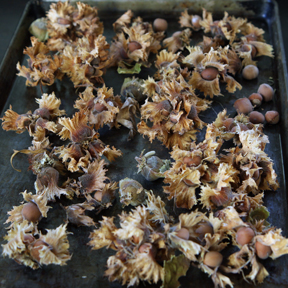
With constant vigilance, I slowly amassed a small basket of nuts. I’ve never grown any sort of nut before and it all felt quite exotic. Hazelnuts grow in clusters of three or four and are protected by fancy outer coats. The nuts are ready to harvest when the husks turn brown – or when they are dropped from the mouths of bluejays. Whichever comes first. I brought my small harvest in to cure and started dreaming about what I would make.
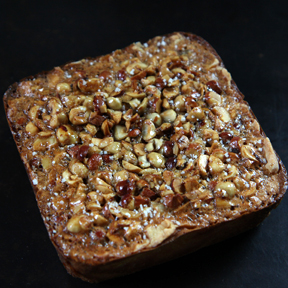
By the time I got the husks and hard shells removed I was left with just under a cup of raw nuts. Not a bumper crop, but still worthy of something. I decided on a teeny-tiny tart. My dad liked to think that he was the type of person to decline dessert, but in all honesty, he could not resist a simple, rustic sweet. So in his honor I made a brown-butter, honey hazelnut tart topped with sea salt. He might have said he that he’d pass, but I know better. He’d be right at my side, dipping his spoon into that caramelized goodness, again and again.
teeny-tiny-tart

Brown-Butter Hazelnut Tart for Two
Adapted from Food & Wine

Tart Shell
(Makes enough for an 11″ tart. I used half the dough and froze the second round for another teeny-tiny tart down the road)

1 stick butter, room temperature
1/4 cup sugar
1 small egg
1/4 teaspoon vanilla
1 cup plus 6 tablespoons flour

Beat the butter and sugar in a medium bowl until creamy. Beat in egg and vanilla. Stir in the flour until just combined. Shape the dough into a ball. Flatten the ball into a one disk for a full size tart, or divide in half for two smaller 5-6 inch tarts, Wrap in plastic and refrigerate for at least one hour.

After the dough is chilled, roll it out on a floured surface to fit your tart pan. Press into pan and trim edges as necessary. Return the pan to the refrigerator and chill for 30 minutes to firm up the dough. Line the tart shell with parchment or foil and fill it with pie wights or beans. Blind bake the pastry on the bottom rack of a 350º F oven for 15 minutes. Remove the parchment and weights and bake for another 10-15 minutes until golden. remove from oven and let cool.

Filling
(Makes enough for one 5-6 inch tart. Double for a full 11 inch tart)

4 ounces shelled hazelnut, roughly chopped (*see note)
1 tablespoon butter
2 eggs
1 egg yolk
6 tablespoons sugar
1/4 cup honey
1 tablespoon cider vinegar
1/2 teaspoon vanilla
pinch of salt
coarse sea salt for topping
Crème fraîche (or lightly whipped cream) for serving

Toast the hazelnuts in a 350º F oven 10 – 15 minutes until golden brown. Let cool.

Heat the butter in a small sauce pan over medium heat for one to two minutes until nutty and golden brown.

In a small bowl, whisk together the eggs, egg yolk, and sugar. Whisk in the honey, vinegar, brown-butter, vanilla, and salt. Stir in hazelnuts. Pour filling over pre-baked tart shell. Return to the lower oven rack and bake for 20 – 30 minutes (depending on the size of your tart). In the last half of baking, sprinkle tart with coarse sea salt.

*A word on hazelnut skins. My crop had tender, pale skins, unlike the dark brown skins found on most hazelnuts. I’m not sure if this is due to freshness, or size of nut, or variety, but either way, I did not bother peeling off this outer skin – as is often recommended. A good method for this, however, is to boil 2 cups of water with 3 tablespoons of baking soda added. Add a cup of nuts and boil just briefly until the water turns black. Drain the nuts and rinse with cool water. The skins will rub right off. Blot them dry and proceed with toasting.

fresh nuts

good deed

I’m trying to keep my chin up, but every time I go out to work in the garlic patch I wind up feeling gloomy. It’s the uncertainty of my seed stock and the scare of Phytoplasma infected seed that’s getting me down. One minute I think I was ruthless in my culling. But the next moment I’m questioning if I should be planting any of it. It feels risky, but for now I am forging on and planting the little bit of seed that I think is safe. I plan on making heavy use of floating row covers next spring to keep any potentially infected plants isolated from the leaf hoppers that transmit the bacteria.
I’ve been in e-mail contact with a handful of garlic growers and the disease is eerily widespread across the midwest – even as far south as Missouri. Current thinking is that the mild winter coupled with a hot spring and early leaf hopper migration are to blame. The warm spring caused the garlic to sprout earlier than normal. Leaf hoppers don’t actually prefer to feed on garlic foilage, but this year it was one of the few food sources available to them upon their early arrival in the north.
It’s easy enough as it is for me to get pretty wound up about our country’s whacky food and agricultural systems and climate-induced outbreaks like this one only compound my fears. But if nothing else, it is a good reminder of how vitally important small backyard gardens are. Diversity, friends! It’s on our side. A wise approach to apply to all aspects of life, really.
On that note, if you have a few healthy heads of garlic lolling around your pantry, I beg you to take them out back and plant them. It’s an easy good deed, I promise. And it’s a good investment. Garlic might be in hot demand. Just break apart each head into individual cloves and plunge them into some fluffed up soil – flat (root) end down, pointy tip up, an inch or two deep. Give about 6 to 8 inches of space between each clove. Add a hefty blanket of mulch – straw ideally, leaves in a pinch – and you’re all set, you’ve done your part. Garlic pigs nation wide will thank you.
And, if like me, you have any so-so looking garlic sitting about, I have a solution for that as well. We’ll just use that up quick in a garlic infused hot chile paste. Oh fine, if you insist, you can save out one of your healthy looking heads of garlic to use instead. I’ll just look the other way – this sauce is worth it. It’s so good that it has jockeyed for front position in the condiment door of the fridge – sending the big bottle of Sriracha to the back. In my house, that’s sayin’ something.
I was introduced to this knock-out hot sauce a few years ago when my friends Bob and Reba came to dinner bearing a jar of it. It was a perfect condiment for the large platter of Indonesian gado-gado I had made. Fiery, but tangy with just a hint of sweet. Later, Bob assured me it’s the perfect condiment for almost everything. Stir-fries, beans, eggs, even – he claims – peanut butter sandwiches. And he’s right. It’s built on a flavor combination that makes you crave more, in spite of the heat.
After I ate through my first jar, Bob and Reba graciously set me up with two more – and the recipe. As it turns out, it’s a recipe from a cookbook that has been sitting on my shelf for years – Sundays at Moosewood Restaurant. The book is a favorite, but it’s thick, and evidently I have not discovered all of it’s gems. I love it when that happens. The book is a collective of 18 different authors, each one focusing on a particular ethnic cuisine. The chile paste – Sambal Bajag – hails from Southeast Asia.
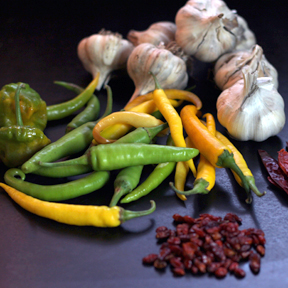
Towards the end of each garden season, I round up the last of the tomatoes and hot peppers for a octuple batch (that’s eightfold, and yes, I had to look up the proper term.) This generally yields about five 1/2 pint pressure canned jars to stick in the pantry.  What follows is the single recipe which makes a healthy 1/3 cup of sauce. This will keep in the fridge for a good long while. Which is nice, because a little dab goes a long way. You can use any combination of finely chopped hot peppers – fresh, dried, or plain old pepper flakes. I typically use a mix of tiny dried Bird’s Eye and semi-dried Ho Chi Minh from the garden. Whatever you do, be bold! Don’t  skimp! As the recipe notes, “If it’s not hot, it’s not right.”

Sambal Bajag
Adapted from Sundays at Moosewood

3 tablespoons oil
1/4 cup minced onion
2-3 tablespoons minced garlic
4-6 teaspoons well minced or crushed hot peppers (dried red chilies, pepper flakes, or fresh)
1/3 – 1/2 cup finely minced tomato
1 teaspoon kosher salt
2 teaspoons honey
2 teaspoons dark molasses

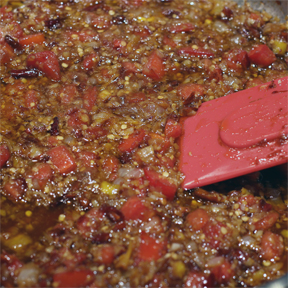
In a heavy frying pan or wok, heat the oil and stir-fry the onions and garlic. after a minute or so, add the hot peppers. Reduce heat and stir constantly so they do not burn. As soon as the peppers darken a little, add the remaining ingredients. Simmer the sambal on very low heat until most of the moisture has evaporated and the oil gradually returns to the surface – about 20 minutes. By this point the sauce should be so well cooked that you can’t really detect the tomatoes. Store in refrigerator. Makes about 1/3 cup.

sweet sixteen

Ouch. I’m forty one years old and until two weeks ago, I never fully appreciated how amazing useful tendons are. In particular the one that runs through your wrist and makes your fingers work. I’m paying the price for my nonchalant attitude. My left wrist is in full rebellion. According to my miracle worker massage therapist, I need to rest my fickle little tendons by not using my hand. At all. Since I can’t do anything useful in the kitchen, and because it’s my cat’s birthday, I thought I’d give him a little face time. Don’t worry, it will be short. I’m typing one handed.
hoops
He’s appeared on these pages before, but that’s Hoops above as a little tyke (pretty chic carpet, huh?). He and his three siblings were delivered into this world in a cardboard box in my cabin in northern Maine (the cabin did not have tri-color green shag – in case you were wondering).
He’s lived in 3 states, 10 houses, and has gone through customs twice. Only once did he accidentally get lost and go back to a former home we had moved out of. He waited in the barn until we came to drive him home.
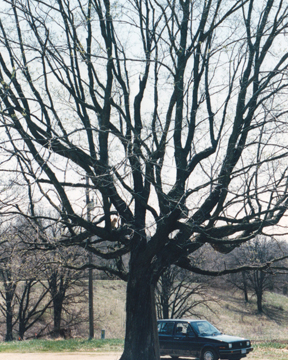
As an adolescent he spent a lot of time in a maple tree. At first we thought he was stuck. After about three “rescues” though, we realized that he just liked to sit in the maple tree. That’s him, three branches up on the left.
hoops in tree
He can hear a chip bag open from any room in the house. Given the choice between a tortilla chip and a scrap of meat, he’ll take the chip. That’s what I’d choose too. Hoops and I eat lot of chips together. Sometimes we have to go on a no-chip diet to keep our figures in check.
Two years ago he survived his one and only major medical calamity. Dental plaque build up fueled a raging kidney infection. We should have brushed.
I’m not at all sure how, but he discovered vitamin E as a kitten and has been crazy for it ever since. He has his own stash of E-50’s and will do anything to knock the jar out of your hand.
At night he sleeps on my head. In the morning he bites my elbow. Just in case I’m not aware that it really is indeed morning.
He’s been late for breakfast exactly twice. Once when he was waiting in the barn of our old house. And once when he had a raging kidney infection.
He comes when he is called and follows along on walks. He can get himself into a lap faster than anybody’s business. I’m pretty sure he is part Buddha.

hoops

And today, my old pal turns sweet sixteen. We’re having chips for dinner. Maybe tomorrow we’ll go for his license.

bad situation

It’s time to get back to the business at hand here. We’re way over due for a garlic talk. The honeybee drama has sort of hogged the stage lately. Truth be told though, I’m having as much trouble with the garlic as I’ve has with the bees. And I’m sort of in denial about it. If nothing else, the bees have been providing a nice distraction.
I’ll cut right to the chase. In my 18 years of growing garlic, I have never had things go quite so wrong. Sure, I’ve harvested some varieties way too late, mislabeled others, and have even had some surface mold issues. But this – this is something all together different. Everything was smooth sailing, right up until about a week before harvest. Almost overnight though, my generally healthy looking garlic plot turned yellow and crunchy. Nearly every single plant, of every single variety. This is when the denial started. We’re in sort of a drought, I rationalized. It’s natural for things to dry up and get crispy, right?
garlic decline
I bumped up my harvest schedule and started pulling varieties as fast as I could. Things didn’t look too bad, but the plants just didn’t seem right. The average head size was maybe a tad smaller than normal, but overall the heads seemed firm. The curing shed gradually filled up and looked like it looks every fall, but I left it hanging to dry with sort of queazy feeling in my stomach.
I decided that the best I could do at this point was a some research. I learned, rather shockingly, that much of the garlic crop in the midwest has been affected by a bacteria called Phytoplasma. Yellowing leaves and premature browning is a key symptom. Many growers in Iowa, Wisconsin, and Minnesota are reporting up to 100% crop loss. Gulp.
The bacteria (which are tricky to detect due to their lack of a cell wall) appear to be spread from plant to plant by leafhoppers. Phytoplasma seriously affected garlic production in Edmonton, Canada 13 years ago, and in Cordoba, Argentina 15 years ago. One scientific paper I read out of Argentina refers to the disease repeatedly as ‘Tristeza del ajo’ or ‘the garlic decline.’ How sad is that? Evidentially many Midwestern crops, flowers, and vegetables have been infected by Phytoplasma disease this year.
If there is any good news in all this, it’s that the bacteria affects only the growing parts of the plant and does not infect the soil or move through the air. The bad news though, and it’s bad, is that Phytoplasma will likely overwinter in infected bulbs and the disease will carry over into the next year’s crop. This means, of course, that it is not a good idea to plant infected seed. See why I’m in still in denial? I’m one sad little garlic pig.
garlic in wiaitng
I have just a wee bit of what appears to be non-infected, normal seed. But even the thought of planting that makes me nervous. And I have quite a lot of infected bulbs. They also make me nervous. Once you get past peeling away their unnaturally ruddy-brown papers, the cloves are normal and safe to eat, but something tells me they may not store very well. Consequently we’ve been eating a lot of garlic intensive meals this fall. I’m doing my best to make the most of a bad situation.
Serving up Yotam Ottolenhi’s Caramelized Garlic Tart has certainly helped. I’m pretty sure I could eat this endlessly. Which is good, because I might have to in order to get through all of my declining garlic. Pair it with a simple green salad for a fantastic dinner. Or serve it up for brunch. Either way, get ready for a heavenly mix of savory cheeses and sweet caramelized garlic. It is simply delicious. And it’s bound to ease some troubles – garlic or otherwise.
garlic tart

Caramelized Garlic Tart
Adapted from Yotam Ottolenghi’s Plenty

1 sheet (8 1/2 oz) puff pastry
3 heads of garlic (3-4 ounces total), separted and peeled
1 tablespoon olive oil
2 teaspoons balsamic vinegar
1 scant cup water
2 teaspoons sugar
1 tsp fresh thyme, chopped
1 teaspoon fresh rosemary, chopped
4 oz soft goat cheese (chev)
4 oz gruyere, shredded (or any similar hard cheese)
2 eggs
1/3 cup cream or half and half
1/3 cup crème fraîche
salt and pepper, to taste

Use a 9 1/2 to 10 inch tart pan with a removable bottom for this recipe. It makes serving it a dream.

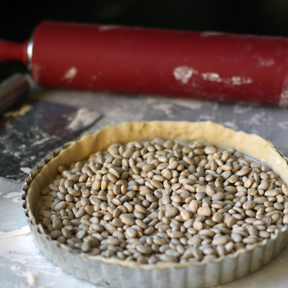
Roll out the puff pastry so it will fill the bottom and line the sides of the tart pan. Transfer to pan and trim any excess. Cut a circle of parchment the diameter of the pan and lay over the pastry. Fill up with baking beans of pie beads and refrigerate for 20 minutes.

Blind bake the pastry shell in a 350ºF oven for 20 minutes. The beans or weights keep the pastry from puffing – leaving room for the filling. Remove the beans and bake for an additional 10 minutes until golden. Once done, set aside to cool.

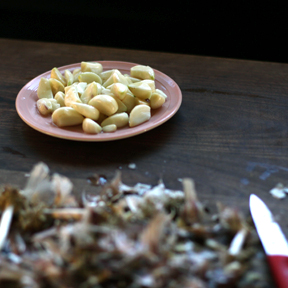
While the pastry shell bakes, caramelize the garlic. Put the cloves in a small saucepan and add enough water to cover entirely. Bring to a boil and blanch for 3 minutes. Drain and dry the garlic. Return the pan to the heat, add oil and fry the garlic cloves in it over medium heat for a couple of minutes. Add the balsamic vinegar and water and bring it to a boil. Turn down the heat, and let it simmer for another 15 – 20 minutes until most of the liquid has evaporated and the garlic is coated in a lucious glaze. Set aside.

Whisk together the eggs, cream, crème fraîche, salt and pepper in a bowl.

To assemble the tart, scatter the baked pastry shell with both cheese. Sppon the garlic and its syrup over the cheese. Pour the egg and cream mixture over the top. Reduce the oven to 300ºF and bake for 30 – 45 minutes, until the tart is set and nicely golden brown. Garnish with thyme sprigs. Serves 8.

pie beans

season finale

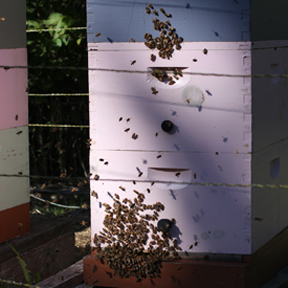
Every once and awhile keeping honeybees feels like a chore. There are times when I just don’t feel like running out to the hives to do a mite count or to check that the fence is still working after an electrical storm. And there are days when the weather doesn’t cooperate with my schedule, forcing me to readjust – or worse – to rush. But really, those times are few and far between. The reality is that beekeeping provides me with a perfect excuse to take a long lunch, or better yet, to cut out of the office a couple hours early and spend the rest of the day outside.

fall colors
I’ve noticed that the urge to impulsively go visit the bees seems to increase with the diminishing day length. Perhaps it’s because I feel the cold breath of winter lurking on the horizon. Certainly the stunning fall landscape might have something to do with it. Or maybe it’s just a plain old love affair with bees. Whatever the reason, I don’t fight it. Last week I headed out to the beeyard for a quick task and found myself lingering. I decided to have “just one more look” in my queenless hive “just in case.”
I pulled a frame from the outer edge, not expecting to find much. I was just about to set it aside for another frame when I saw her. A queen. A petite queen, but undeniably a queen. Here is where I can’t decide if the world sped up, or went into slow motion. Before her presence could even fully register in my brain, I watched as she zipped off the frame and flew away, high into the sky. It’s a good thing I was wearing a veil, because I’m pretty sure I just stood there with my mouth open, dumbfounded, for a good minute. A rogue bee flying into my mouth would have only clouded the situation.
I pulled myself together and, of course, immediately started second guessing what I had seen. It couldn’t have been the queen, I told myself. I must have just imagined her, out of sheer hopefulness. I made her up, I was sure of it.
But I didn’t. A queen can be tricky to spot, but when you see her, you know. There is no maybe about it. I saw the queen I had been hoping to find for weeks just a clearly as I saw her fly away.
honey jars
It doesn’t happen often, but it is possible when working with a hive that the queen will accidentally get out. I remember one occasion after a particularly rigorous hive check, I had everything put back together, ready to head for home when I happened to look down and see the queen sitting on the front porch of the hive, looking disorriented and maybe even a little miffed. I begged her pardon as I scooped her up and led her back into the safety of the hive. If you actually see the queen unintentionally fly from the hive, I’ve heard it is best to stand right where you are for 10 to 15 minutes and wait. The idea being that the queen has hopefully sighted you as she left and will use you as a guide to return.
So I stood. And I stood some more. I may have been standing still, but my brain was not. Was this new queen just waiting around for the exact right moment to depart on her mating flight? A moment which I had just indadvertedly created? Or had she already been on her mating flight but not really settled back in? Did I spook her out? Had I just undone a summer’s worth of effort from the hive to raise a new queen? And was that really the queen I saw?
Humph. That perfect golden afternoon light that drew me out to the hives in the first place was starting to fade. I put the hive back together and sent as many good thoughts as I could think out to the fly-away queen. Wherever she was. I drove home, wondering how the season finale would write itself. Would it be a gripping cliffhanger? A storybook ending? Hopefully not a tearjerker. It’s certainly been a roller coaster ride this summer – full of anticipation and thrills. And let me tell you, it’s been encourging to have so many people along for the adventure.
Don’t worry, I’m not going to leave you just dangling up there at the top of the ride. I couldn’t. Because I’d burst if I had to wait all winter to tell you that the hive is now home to Queen Freeda’s magnificent daughter. That’s right! The petite little queen made it back to the hive. I know, because this week, I saw her, plain as day, no maybe about it. And I found cell after cell of perfectly laid eggs. At this late in the game, I may need to borrow a few bits and pieces from other hives to make sure they have a fair shake at surviving the winter. But if their perseverance thus far is any indication, I’m not too worried. Those girls are troopers.
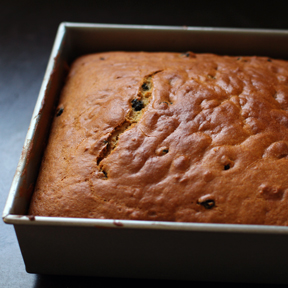
After a summer of meddling and fussing and worry, I finally have a daughter of my all-time favorite queen.This called for cake. But not just any cake. I wanted a simple, sturdy cake. One I could wrap up in a piece of waxed paper and head out to the beeyard with. Honey, of course, should be the star.
honey cake
The recipe sort of formed from what I happened to have on hand. But after enjoying several pieces, I’ll make it a point to have these ingredients on hand again – it was just the combination flavors I was looking for. I intentionally used half spelt flour, because it adds a subtle sweetness to a not overly sweet cake. And I have to admit that I am drawn to cakes that go just as well with a late afternoon espresso as they do with a smear of butter for breakfast. This is that cake. Oh, and it tastes especially lovely outside on a fall day – with or without some bees to enjoy it with.
Honey Cake
Adapted from Tom Herschfeld

1 cup spelt flour
1 cup unbleached flour
1 1/2 teaspoons baking soda
1 teaspoon cinnamon
3/4 teaspoon cardamom
1/2 teaspoon salt
1/2 cup honey
2 large eggs
1/4 cup plain greek yogurt
1/4 cup melted butter
1/2 cup half and half or milk
1 cup dried blueberries

Sift dry ingredients together into a mixing bowl. In a another bowl, whisk together honey, eggs, yogurt, butter, and half and half. Stir wet ingredients into dry with a wooden spoon. Gently fold in blueberries.
Spoon batter into a well greased 8×8 baking pan.
Bake at 350º F for 30 minutes, or until a toothpick comes out clean.
honey cake

tomato heaven

I picked the last two ears of sweet corn form the garden last night. They weren’t quite as tender and sweet as the ears from the height of the season, but I’m not complaining. I got them down just fine. And even though I am just the teeniest, tiniest bit tired of tomato sandwiches, I keep right on eating them. As many as I possibly can. Because pretty soon there won’t be any tomato sandwiches. And I know it will be a very long wait until the next one.
sweet corn
I’m getting pretty good at waiting though. My bees have given me plenty of practice lately. That’s right, nine weeks out, and I am STILL waiting to find out if I have a new queen in the mystery hive. The only thing I know for certain is that Freeda’s girls are really putting my patience to the test. The laying workers and/or ill-mated queen that were busy at work a few weeks ago are no longer laying. At last check there was a complete absence of any type brood. I’m still hanging on to a thread of hope that a new queen has hatched and has merely been out and about, taking her sweet time to get settled in. But if there are no new eggs when I check in a few days, I will most likely reunite the queenless hive with the original Queen Freeda and her gang.
After what we’ve been through, all I can do is laugh at the prospect of backtracking and putting them back together as one. But that’s okay. If that’s the case, they will go into winter as a big, strong colony that will most likely be ready to split in the spring. Which means I’ll get to try and do it all over again! I wish I could say with confidence that I’ll have more experience under my belt next time, but I’ve kept bees long enough to know that experience only takes you half way. The rest is a funny combination of great mystery and dumb luck. I respect that.
freeda's hive
The girls have certainly kept me on my toes the past two months. I probably have a little less honey to show for my nine weeks of effort, but it’s a good reminder that I didn’t get into beekeeping so much for the honey harvest as I did just to have some bees to visit with. I’ve spent my fair share of time at the beeyard this summer, and my take-home message for the season is “wait please, be patient.” Pretty good advice, really. And despite everything, there is still plenty of honey to see both me and my bees through the long winter.
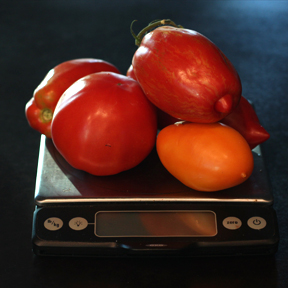
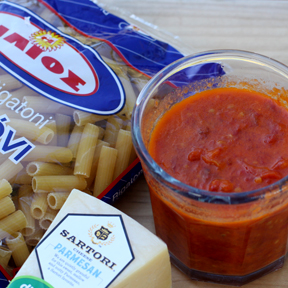
Lucky for me, I’ve also got a stockpile of tomatoes. Canned, salsa-ed, slow-roasted, and sauced. It’s nice to watch the pantry and freezer filling up.  On the rare day when I have had one too many tomato sandwiches, I put my tomatoes to work in a 3-ingredient sauce for a fantastically simple dinner. I stumbled across Marcella Hazan’s recipe last summer at Food 52. A find that inadvertently ended my search for the perfect tomato sauce. I don’t see any reason to ever make another sauce. Ever. This is pure, lick your plate, tomato heaven. Although, I did just read about an older, James Beard version of the same sauce that uses garlic instead of onion. I admit that’s a rendition worthy of a try.
I almost always make a double batch of sauce. Whatever doesn’t get slurped up for dinner gets put into the freezer for a cold January night. Having a dozen or so pints tucked away really takes the edge off of waiting for tomato sandwich season. Just as a slather of fresh comb honey on warm toast bolsters my patience for the bees.
tomatoes
Marcella Hazan’s Tomato Sauce with Onion and Butter

2 pounds fresh, juicy, ripe tomatoes
1 onion, skinned and cut in half
5 tablespoons butter
salt to taste

Blanch the tomatoes in a pot of boiling water for one minute. Drain, cool, and slip the sinks off.

Coarsely chop the tomatoes into a sauce pan. Add the butter, onion, and a big pinch or two of salt. Cook uncovered at a very slow, but steady simmer for about 45 minutes, or until it is thickened to your liking and the fat floats free from the tomato. Stir occasionally and mash up tomatoes as they cook with the back of a spoon. Taste and correct for salt. Discard the onion before tossing with pasta. Serve with freshly grated parmesan cheese for the table. Dresses 1 to 1/12 pounds pasta. Freezes well.

pasta and sauce

stiff competition

I have a dark and dirty secret. It involves the Minnesota State Fair. And a green bean. Before I spill my guts though, I need to rationalize by explaining that I grew up with the fair. It’s in my blood. Even though I’ve been a Wisconsin resident for eleven years, I still make it a point to visit the Great Minnesota Get Together every August.

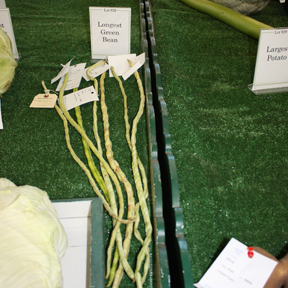
The amount of things to do, see, and eat is thrillingly overwhelming. But my hands down favorite hangout is the Ag-Hort-Bee building. There you will find giant pumpkins the size of small cars, honey bee demonstrations, and honey ice-cream. You can get composting advice, watch the Ginsu Knife dealer put on an amusing show, and catch a straw bale gardening demo. There is certifiably crazy crop art and gorgeous displays of perfectly shaped vegetables lined up on neat styrofoam trays. And if that isn’t enough, there is the longest green bean competition.

crop art kitty

Every year I marvel at these extraordinarily long beans. So much so that one year, I got the bright idea that maybe I too should try my hand at growing a long bean. I returned home that August brimming with excitement. I did my seed research over the winter months and decided on two varieties – Red Noodle Yard Long and Asparagus Yard Long. I dutifully scoured the rules and regulation handbook for mention of a state residency requirement. Finding none, I enthusiastically sent in my registration, Wisconsin postmark and all. They sent back my entry materials – no question or mention of what state I resided in. All systems go.

The following spring I was so anxious that I even started some beans indoors. No one starts beans indoors. The fact that they don’t really care for transplanting didn’t deter me. I had my eyes on the prize. I spent the summer coddling my plants and sending regular updates to my gardening mentor and self-appointed bean coach, Lorna, in northern Maine. When Mark and I left for the Boundary Waters for a week I put signage around the bean poles so the cat sitter wouldn’t inadvertently pick any contenders. With only a week to go, my longest bean was just shy of 25 inches.

Only then, as I was double checking my complimentary parking pass, did I stumbled across something in the entry materials very clearly stating that all competitors must be from Minnesota and that any competing vegetables must be grown in Minnesota soil. I was sunk.
long green bean

I paced around the garden. Surely I did not have a climate advantage over anywhere in Minnesota. If anything, the cool Lake Superior spring is a growing disadvantage. I couldn’t help myself. I called my brother in Minneapolis. He has a small garden. There must be some green beans growing in it. I explained the situation and pleaded for him to go in cahoots with me. His name, my bean. I think he agreed only because he thought there was substantial prize money on the line. In truth it was merely a $10 purse. I promised that his name wouldn’t be muddied by the press. And then I did it. I sent in a last minute registration in my brother’s name.

I resumed nervously pacing the garden. My bean, or rather my “brother’s bean” was due for judging at 7:30 am on the opening morning of the fair. I picked my 2 best contenders the day before the fair and laid them out in an oversized cooler on ice. Mark and I headed south. When we reached the border I called my brother to let him know the illicit bean had crossed state lines. We talked over the next morning’s logistics. It occurred to me that I was asking my already overly busy brother to drive across the city in rush hour traffic for a green bean.
I looked over at Mark. I suggested that perhaps, maybe, if he wouldn’t mind, he could stand in for my brother? Then I reminded him of our marriage vows. In sickness and in health, we are a TEAM baby, ’til death do us part. Nothing. I offered up a third of the prize money. Mark countered by asking if they check ID. Probably not, I assured him.
All I can say is that it was a good thing Mark was driving the next morning, because I was a jittery wreck. Mark gallantly led me and my bean to the vegetable staging area and told me to wait in the corner while he went to register. As I was standing in the shadows, sweating bullets, an old-timer waltzed by me with a bean clearly longer than mine. “Nice bean,” I muttered. We met again, post-judging, at the competition table. His bean hadn’t won either. We agreed that it was stiff competition. I was sadly relieved. The blue ribbon would have only saddled me with guilt.
green beans
My garden still offers several varieties of green beans, but I haven’t had the gumption to try long beans since my illegitimate attempt. I play it safe and stick to slender haricots and the occasional pole bean. What has changed, however, is the way I serve beans. I used to just dress them in a bit of butter with a dash of salt and pepper. But now, because I know the daring side of green beans, I sauce them up with a simple homemade Sriracha butter. It’s zingy, bold, and thrilling – just the way a green bean likes it.
green beans
Sriracha Butter Green Beans

1 pound green beans (bush, pole, or if you’re feeling really daring – yard longs)
3 tablespoons butter
1 tablespoon seasoned rice vinegar*
2 teaspoons Sriracha
Coarse sea salt

Steam beans until tender. Meanwhile, melt and lightly brown butter in large skillet. Whisk in seasoned rice vinegar and Sriracha. Cook for a minute to blend before adding beans. Toss well and server hot with a pinch or two of coarse salt. Mop up any extra butter with a piece of good, chewy bread.

*Seasoned rice vinegar has a touch of sweetness added to it. If you are using unseasoned rice vinegar, add a pinch of sugar.

long benas

royal mess

For those of you waiting for the next installment of “As the Hive Turns,” grab some popcorn and a drink. It’s a juicy episode. Previously in the beeyard, we were patiently waiting to see if Queen Freeda’s girls would successfully raise a new queen after Freeda herself had been intentionally removed from the hive. It was a long, mysterious wait. [play suspenseful music].
honeybee hives
But last week, things got even more mysterious. I was sitting at my friend Mary’s table, positively glowing from the effects of her amazing Nicoise salad, when she discovered a voice mail for me on her cell. It was Dana, gracious owner of the land where my bees humbly reside. “There’s a bee situation,” the message said. No matter what way you slice it, a “bee situation” at nine o’clock at night is never a good thing. [play suspenseful music]. I called him back to learn that the neighbors down the road from my hives had a swarm in their yard.
What made it a “situation” was that the swarm was evidentially moving into some cracks in their cabin siding. They were, understandably, upset by this. Swarms in and of themselves can be upsetting. They are big and intense sounding. But what most people don’t realize is that swarms are relatively harmless. The bees in a swarm are not aggressive and they don’t want to sting. In fact, they are so loaded down with honey in the guts, that most of them physically can’t sting. All they want is a new place to set up shop. Ideally just not in between the walls of  someone’s cabin.
My head was spinning. I didn’t see how it could possibly be my bees. I’d been checking them so thoroughly and regularly. None of the hives were in a position to swarm. Still, it did seem like a reasonable assumption that they were my bees. Either way, the light was fading fast. I called the neighbors to explain that there was not much I could do at the moment. Nor was I available until late the next day. But these details hardly mattered if the swarm was moving into the walls. I’m not a bee whisperer, I confessed. I can’t coax them out with a flute. I sadly concurred when they said they wanted to take care of it with poison. [play sorrowful music].
When I finally did get out to my hives the next evening, I was relieved to see that all three had strong populations. And all three hives had eggs! The presence of eggs suggests the presence of a queen. And if you recall from our last lesson, a swarm typically leaves with the old queen days before the new queen in the hive even hatches, and sometimes weeks before the new queen will start laying. My honeybees have taught me never to guarantee anything, but I was fairly reassured that the “situation” swarm did not originate from one of my hives.
worker-brood
I was particularly interested in seeing the new queen in Freeda’s former mystery hive. But of course, because I was really looking, she was nowhere to be found. Still, there were eggs! And small larvae. Surely this means there is a new queen, right? Right. Except for the fact that my bees have taught me never to guarantee anything. Maybe I have a new queen. Maybe I don’t. Maybe it was my swarm after all and those were residual eggs. I buttoned up the hives, not really convinced of anything.
But wait. There’s more. [play suspenseful music].
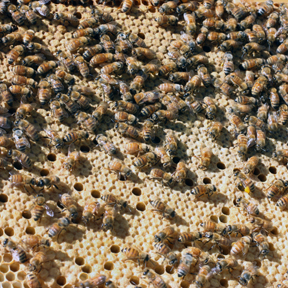
I decided to do what I do best. I gave it some time. I waited, my usual painstakingly long week. Then I mustered my confidence and went out to do another hive check. And on the first frame I pulled out of the deep hive box I found more eggs! And more little larvae. But after pulling a few more frames, I began to notice something suspicious. There was an awful lot of drone larvae. Drones are boy bees that develop from unfertilized, haploid eggs. They’re like big, nice thugs. You can tell drone larvae from worker bee larvae because it is larger and more rounded. Once it is capped over, it sort of pops out of the comb. A patch of drone brood looks bubbly. Worker bee larvae is flat and smooth. A queen lays both types of eggs, but mostly she lays worker bee eggs. (The photo above is a frame from Freeda’s real hive. The picture below is from the mystery hive. Pretty big difference, huh?)
drone-brood
It’s time for the quiz. Did I mention there would be a quiz? [play dreadful music]. Remember last time when I explained that the special royal jelly a larvae gets fed is what enables it to develop into a into a queen bee with fully functioning ovaries? Well guess what? All of the other hundred of thousands of worker girl bees have ovaries too. Most of them just aren’t fully developed. Which means (20 points)? Which means that some workers can lay eggs too. They just aren’t fertilized eggs. Which means? Anybody, anybody? Workers can only lay drone eggs. The problem with this is that drones don’t actually work – they don’t forage, they don’t help keep the hive clean, the don’t tend baby bees. They’re just nice, big thugs, remember? They’re nice though. They don’t even sting.
Sometimes when a hive is broodless for several weeks (as a result of there being no queen to lay eggs) a worker can be triggered into laying eggs. It doesn’t matter to them that they can’t lay fertilized worker bee eggs, they just simply sense a lack of eggs in the hive and try and pick up the slack. Yet one more thing I love about honeybees. They don’t slack. Unfortunately, it is very hard to stop laying workers once they start. And what you end up with is a mess. Instead of laying drone eggs off neatly to the sides and edges of the frame, like a queen does, laying workers put their eggs in cells all over the place, all willy-nilly. Including up in the honey supers – which is no place for eggs. The mystery hive is currently a royal mess.
But here’s the thing about laying workers. There are generally several in a hive. As a result, it is not uncommon to find 2, 3, or 4 eggs in one cell. And because they don’t have the long slender build of a queen it is difficult for them to drop their eggs in the bottom of the cell. Often they land on the side walls instead. So I was perplexed when examining the frames. I didn’t see any double eggs. And they seemed properly laid. So it’s possible the new queen hatched and came back to the hive, but was not successfully mated and is therefore laying mostly unfertilized drone eggs. But even well fertilized young queens can be a bit sporadic in their laying patterns. It takes them a while to dial into properly laying a 1000-2000 eggs per day! So maybe the new queen is just working out the kinks. Or maybe a few workers got restless and started to lay all that drone brood, only to have the new mated queen return and take over. And of course it could be that there really is no queen, but highly talented laying workers instead. You should know by now that I can’t guarantee anything.
So once again, I found myself pulling a frame of eggs from the real Freeda’s hive and giving it to the mystery hive. This way they will at least have some fertilized eggs to work with if they decide that they do infact need to raise another queen. Which means (another 20 pointer)? That I have another painstakingly long wait ahead. This wait, however, will be spent in a canoe in the Boundary Waters. And that, I’m pleased to say, is the very best sort of wait.

the comeback kid

I got the best sort of e-mail last week. It was from a farmer down the road wondering if I wanted to experiment cooking with fresh red currants. I believe my response was something like “heck yeah!” The farm has recently introduced some currant trials into their thriving blueberry and raspberry operation. But the problem with currants is that they have (rather unfortunately) fallen out of fashion. Luckily there are places like Highland Valley Farm that are making an effort to reintroduce them into modern cuisine.
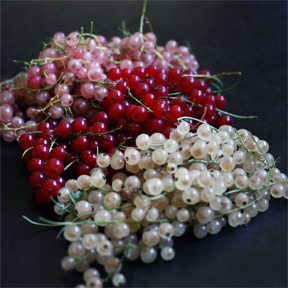
pink, red, white currants

I have to admit that a fresh currant has never managed to make its way into my own kitchen. Which of course, made me wonder why. Magdalen, at the farm, directed me to asktheberryman.com for a brief history lesson. I learned that there was actually a federal ban on growing most strains of currants (and their cousin gooseberries) from 1900 until 1966. And even still, many states prohibit the cultivation of black currants. Evidentially, the shrubs can host a serious disease harmful to white pine trees. And since the white pine was a major player in the timber industry at the turn of the century, currants and gooseberries were forced to take a back seat. In fact, they pretty much got ditched all together. The white pine blister rust that the shrubs can carry is still a concern, but modern day commercially available cultivars generally have a greater resistance to the disease. Whew.
I was now feeling educated enough to head over to the farm to pick up my berries. Magdalen had told me they have a few different varieties, but what she didn’t mention is how positively gorgeous they are. I was expecting a carton of plain-jane little red berries. But what I got was a mix of stunning jewels – Pink Champagne in the most perfect shade of light pink, striking ruby red Rovadas, and almost translucent white Blankas. I had my fingers into each bag before I was even out of the driveway.
All of the berries were juicy and tangy – sort of like miniature grapes with a tiny seed. But right away I could detect subtle differences between the varieties. The white Blanka berries are firm and have a soft, more subtle seed. The lovely Pink Champagne seems the most delicate of the three – soft, but with an exciting flavor twist. Is “pink” a recognized  flavor? Because they taste pink. And the Rovada reds are a perfect blend of both. The berries are tart, but not overwhelmingly so. Of course I’m the type that also enjoys sour cherries right off the tree. I love the rush of something tangy on my tongue.
After I ate my fill of them raw, I realized my education was only half complete. I had no clue how I was actually going to cook with them. I flipped through the indexes of about a dozen cookbooks. Nothing. Not even in The Joy – my standard go to for all things old fashioned. Searching on line yielded a bit more, but I was hard pressed to find anything much beyond jam and jelly recipes. Not that I’m opposed to preserves, I just wanted something a little more adventurous. Which meant I was on my own with this comeback kid.
I decided to start by baking them – straight up. I wanted to keep the currants as unadorned as possible to see how their flavor might change in the oven. So I made simple little rustic cornmeal tart shells for the berries to rest in and laced them with just a bit of honey. The tarts were lovely, and as I suspected, the currants mellowed somewhat in the oven. There was more of a caramelized sweetness shinning through, but still enough of a tang to warrant a small scoop of vanilla on the side. I can certainly see kicking this up a notch and making a custard based tart studded with these little gems.
currant tarts
As I was enjoying my tart, pondering what my next experiment might be, I remembered a great appetizer that my friend Kris made a few weeks ago. She simply plated up some soft cheese, scattered red currants about and drizzled honey over the whole shebang. A delicious accompaniment for a basket of pita crackers. So simple, yet elegant and complex tasting. The flavor combo was such a knockout that I decided to take it one step further and turn it into a savory scone. I knew it would involve some Sassy Nanny chev and a bit of honey. But my real dilemma was which variety of currant to use. The bright red Rovadas would be the showiest for sure, but something in me really wanted to use the white Blanka. I liked the idea of a scone riddled with secret little land mines of flavor. It worked, just as I had hoped. A little bit tangy, a little bit sweet, and all with an element of surprise.
currant scones
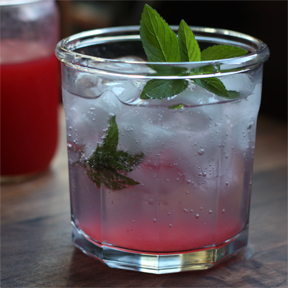
I had some leftover berries mixed with honey from the tart trial, so next I decided to cook them down a bit on the stove and make a currant syrup. I learned in my online research that currants are naturally high in pectin, meaning the juice thickens up nicely on its own. I opted to slow simmer them just for a bit before taking them off and straining them though a jelly bag. I think you could cook them down longer for a thicker sauce for meats or spooning over yogurt, but I wanted a nice light syrup to add to a glass of soda water or lemonade. I set the syrup in the fridge to chill while I went to the garden for some sprigs of chocolate mint. I muddled a few leaves of mint in the bottom of a glass, filled it with ice, and proceeded as planned. Not only was my drink striking, I felt especially good knowing that I was getting a healthy dose of vitamin C and potassium to boot.
fizzy-currants
Thinking about the currant’s great nutrient value reminded me that I should not overlook using them raw. They make an amazingly bright addition to my morning granola. And I can easily see tossing them into green salads and grain based pilafs. Which lead me to the idea of using them in a fresh salsa. I had an avocado in waiting on the window sill. So back to the garden I went, for a jalapeño and cilantro. I mixed this all together with my usual culprits – honey and garlic – for a cooling summer salsa. This time around, I knew without hesitation that I wanted to use the Pink Champagne berries, simply for the preppy pink and green color scheme.
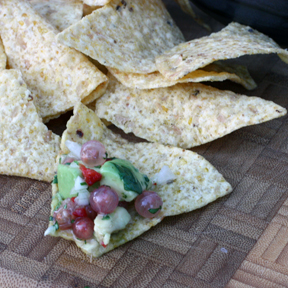
chip with salsa
Even after all of this playing around, I still had a few leftover berries for the freezer. Which will be perfect to make a small batch of David Lebovitz’s currant jam. I love the simplicity of his recipe. And If I don’t get to it, that’s okay too. I’m perfectly fine with having a bag of zesty jewels in my freezer. It’s nice to have a secret weapon tucked away.
I’ve had a great week welcoming this newcomer into my kitchen. We are strangers no more. Though I’ll be honest that it took a while to get my head around the little seeds. They add a certain chewiness that can be awkward at first. But it’s sort of refreshing to be introduced to a new texture. And let’s face it, currants haven’t exactly had an easy go of things. I sort of like the notion of eating such a renegade berry. And how lucky we are to even have the chance to do so. I say hats off to places like Highland Valley Farm and home gardeners willing to give currants a second shot.
Fresh Currant Tartlets 
Note: Be sure to use a parchment lined baking sheet. I definitely experienced some honey ooze from the filling. If the thought of this frightens you, and/or your currant/honey mixture seems particularly juicy and runny, you can add a teaspoon or so of cornstarch to thicken it up.

Filling
3 cups fresh currants (ideally a mix of varieties)
1/2 cup honey

Gently mix together in a bowl and set aside.

Crust (adapted from Kim Boyce’s Good to the Grain)
1 1/2 cup very fine cornmeal
1 cup flour
1/4 cup plus 2 tablespoons sugar
1 teaspoon kosher salt

4 ounces cold butter, cut into 1/2-inch cubes
1/4 cup plus 2 tablespoons cream
2 egg yolks

Sift dry ingredients into the bowl of a stand mixer. Add in butter and mix until the butter is coarse and mostly broken in, increasing the speed a bit as you go. Add the cream and egg yolks and mix until combined. The dough will be crumbly, but it should come together nicely when turned out onto a floured work surface. This dough is best shaped right after making while it is still at room temperature. Form the dough into a clump and divide it into 10 equal pieces. Use the heel of your hand to flatten each piece into a 5-inch round circle, making the edges slightly thinner than the middle. Use a bench scraper and flour to aid in working with the dough. Transfer discs to a parchment lined baking sheet. Working with one tart at a time, spoon about 1/4 cup filling onto the dough and gently fold edges up toward the center. You want an imperfect, slightly ruffled looking  edge. The dough is pretty forgiving, so just work with it as you go. When all the tarts are filled and formed, bake in a 375º F oven for about 35 minutes, until the filling is bubbly and the edges are slightly browned.  Makes 10 3 1/2-inch tarts.
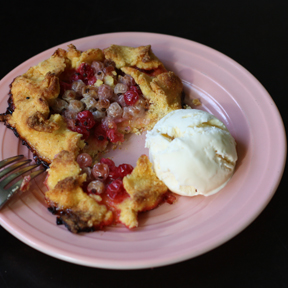
currant tart

– –

Savory Chev and Currant Scones

2 cups flour
1 tablespoon baking powder
1 teaspoon kosher salt
4 tablespoons cold butter, cut into 1/2-inch cubes
1 cup cream
1 egg
3 teaspoons honey
1/2 cup crumbled chev (soft goat cheese)
3/4 cup fresh currants
cream and honey for wash

Combine flour, baking powder, and salt into the bowl of a food processor. Pulse a few times to mix. In a separate bowl, beat together the cream, egg and honey, then stir. Add the butter cubes to the food processor and pulse just long enough to cut in the butter. There should be some pea size pieces of butter remaining. Dump the dry butter mix into the cream and egg bowl, along with the chev and currants and mix until the batter is just combined and comes together. Again, you still want to have some nice flecks of butter. Turn the dough out on to a floured work surface and pat it into a round disc that is about 1 inch thick. You can make one 8 to 9 inch disc or two smaller 6 inch discs for 2 rounds of slightly smaller scones. Brush the top of each disc with a bit of cream and a drizzle of honey. Cut each round in half and then portion each half into thirds for 6 larger or 12 smaller scones. Transfer to a parchment lined baking sheet and  bake in a 350º F oven for 15-20 minutes until scones are just slightly golden and brown. Makes 6 large or 12 smaller scones.

scones

– –

Red Currant Syrup

Fresh currants
Honey, to taste

Put currants in a saucepan and drizzle a spoonful or two of honey over berries. Bring to a gentle simmer and cook over low heat, sort of mashing up the berries as they cook. Taste occasionally and added enough honey to reach your desired sweetness. Simmer for about 15-20 minutes. remove from heat and strain mixture through a jelly bag of fine meshed sieve. Store syrup in fridge. Add 1 to 3 tablespoons syrup to club soda, lemonade, or vodka. Garnish with mint or lime.

Alternatively, cook down the currants further and use it as a sauce for meats, yogurt, or ice cream.

– –

Currant-Avocado Salsa

2 avocados, peeled and cut into 1/4-inch chunks
3/4 cup fresh currants
1 tablespoon fresh lime juice
1-2 tablespoons honey
1 minced jalapeño
1 small clove garlic, minced
1/4 cup sweet onion, chopped
2 tablespoons cilantro, chopped
Salt and pepper to taste

Mix lime juice, honey, and jalapeno together in a bowl until well combined. Stir in remaining ingredients and gently mix. Serve with tortilla chips or pita crisps. Serves 4
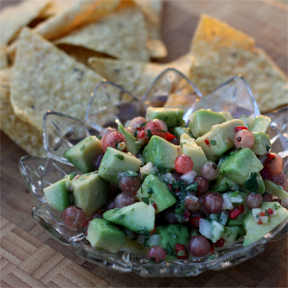
salsa

jumping the gun

This is a good time to be a honeybee. Summer is in full bloom. Basswood, sumac, white clover, ironwood, blackberries. It’s a veritable bee smorgasbord. And access to this endless buffet puts the girls in a very fine mood. It’s a joy to go out and visit with them. Even if I’m not going into the hives, I can wile away a good hour laying on my back, just watching the traffic come and go. But opening up the hives and snooping around is always exciting this time of year. There is so much going on. One look, and you’ll never again question the expression “busy as a bee.”

honeybee on flower
Before I pull the top cover off, I put my hands on the sides of the hive for a few moments to let the girls know I’m there. I think about the hive and what new mystery might be waiting inside. Then I give a gentle puff of smoke to the entrance and begin. I have to pull the honey supers off the top before I can get to the actual inner workings of the hive. The supers are the boxes where the bees make and store the bulk of their honey. They are about half as deep as the hive boxes, which is a good thing – honey is heavy. There are bees in these boxes as well, working to store and cap the honey, but the queen and the bulk of the hive are down below in the deep boxes. The photo below is from the gangbuster honey harvest of twenty-ten.
bee hives
With the honey supers set off to the side, I can start pulling out individual frames from the hive boxes. This is where the real action is. And there, on the very first frame I pull, is Queen Freeda. I don’t always see my queens, but it’s a treat when I do. They are magnificent. Long, slender, and graceful. Everything you’d expect from a queen. But there was something else on the frame. A tell-tale, peanut sized queen cell hanging near the bottom. This only means one thing. It means you’re about to lose your queen, half of your foragers, and a good quantity of the honey stores to boot. In other words, it means that the hive is getting ready to swarm.
When a hive is bursting with bees in the height of summer, they can start to feel a little cramped in their quarters. To remedy this, they make the decision to split their population in two. The workers will being to feed several small larvae copious amounts of royal jelly in specially constructed queen cups. Royal jelly is a substance secreted from glands in the heads of worker bees. And it’s what makes a larvae develop into a bee with fully formed ovaries – it’s what turns what would otherwise become a regular, non-fertile worker bee into a queen. Pretty cool.
But I’ve digressed. Back to the down and dirty details of a swarm. Shortly after these queen cells are underway and developing, roughly half of the bees in the hive will load up on honey and take flight with the original queen in tow. Within a few days, a new queen will hatch in the hive. Her first order of business is to destroy any other developing queen cells. Shortly after, she will exit the hive for her one and only mating flight. If the stars align and the weather is good, she will return to the hive and begin laying eggs in a few days. Meanwhile, the rouge gang that left the hive will have sent out scout bees to find a suitable place to take up residency. Two hives become one, and everyone has a little more elbow room. Preservation first hand.
ruth-wilson-swarms
As a beekeeper though, the trick with these shenanigans is to keep both halves of the hive in your possession. It bodes for a much better honey harvest. One way to accomplish this is to be ready the moment the hive decides to swarm and hope they land somewhere where you can capture the big cluster to install in a new set of hive boxes. This method is dicey though and generally requires either a sixth sense or constant vigilance. I’ve never managed to successfully re-hive a swarm.
The other way is to intervene and create sort of a mock swarm. This involves removing the frame that has the original queen on it, along with 9 other frames of bees and honey, and setting them up a new hive box. The rest of the hive is left as is, with the developing queen cells. But since there is now no queen in the hive, and because their population has been reduced by removing a box full of bees, there is little desire or capacity to swarm. The first new queen to hatch will take her mating flight and return to be heir to the hive.
I was positively giddy when I discovered what Freeda was up to. I knew instantly that I wanted to divide her hive. I tried not to get ahead of myself, but my mind raced with thoughts of having Freeda AND her daughter. I’ve boasted about Freeda before – how pleasant her girls are, and such workhorses! I’ve never had a nicer, more durable, sincere, hard working queen. And what luck to have her be right where I needed her. I ran to the car for an empty hive box to isolate her. Then I raced back home for the rest of my equipment – a hive stand, a bottom board, another hive box, and an inner and outer cover. I was running around with the excitement of a kid on Christmas. Out of breath I called my friend and bee mentor Kris for moral support. I’ve split hives before, but always with purchased queens to install, and never in height of summer with so many things to think about.
dividing the hives
Back at the bee yard, I got to work building up a new hive box for Freeda with the appropriate mix of honey, pollen, bees, and larvae. I discovered that in my initial haste I had damaged the queen cell hanging from the bottom of the frame. But I didn’t think much of it – there would be others in the hive. And besides, I didn’t want to put a developing queen into the  split hive anyway. The new queen could hatch and spur a mini-swarm. My heart sank a little though as I looked through the rest of the frames in the original hive. I had damaged the best of all the queen cells. Had I known, I could have removed Freeda from the frame and left that frame in the original hive. I had half a mind to call the whole thing off and reassemble the hive as one. I knew I was was jumping the gun, but I went ahead with the split, hoping that the remaining, less developed queen cells would make it. Or worse case that there were enough fresh eggs for the workers to start some more queen cells.
I buttoned everybody back up and headed for home with equal amounts of anticipation and dread. Would they pull it off, leaving me with Freeda and her daughter working side by side? Or did I go and botch it all up? I waited a painstakingly long week before checking in on the queenless hive’s progress. At which point my heart sank even further. The two most promising looking cells had literally vanished. Perhaps the growing queens were subpar and the workers removed them. That’s my best guess anyway. At this point, there were no new, young eggs in the hive since Freeda had been taken away over a week ago. So I did the next best thing. I went into Freeda’s new hive and found a frame with eggs on it to swap into the original hive. I hated to take a whole frame of developing bees from her fledgling population, but it needed to be done for the other hive to survive. I drove back home. Dread outweighed anticipation this time.
And now I’m in the midst of another painstakingly long week. My heart wants nothing more than to know how they are doing. But my head knows the best thing I can do is let them be. I’m better off just lying on my back in front of the hive and watching the traffic come and go.
bees entering hive

instapig

No Instagram images were found.