Archive Page 10

stepping back

Why is it that one of life’s lessons feels the need to repeatedly hit me over the head? Thick skulled? Slow learner? I don’t know. But here’s what I do know. Keeping bees is good for me. And it has relatively little to do with any honey I garner. But it has everything to do with being a part of something ancient, something miraculous, and allowing it to seep in and be just that. A mystery. Sounds simple, I know. But for some of us – that whole “letting it be” thing? It’s just not that easy.

Here’s the nitty-gritty truth. I like to be in control. I like to know what is going on – and why. I like clear instructions. I like to work hard and get results and answers. I like things that are specific. Give me instructions. Give me a recipe. But, as it turns out, honeybees are not conducive to any of this. I read endlessly about honeybees. I participate in online honeybee chats. I go to honeybee meetings. I give it my all when it comes to understanding honeybees. And still, they always seem to one up me.
My girls have been having an off summer. And it pains me to tell you that I can not figure out why. I can’t blame it on the weather, I can’t even blame it on my management skills. By all indications, things should be going well. But something is off. Valerie’s hive has been lackadaisical all summer – and with no clear indication as to why. I actually miss her girls’ sassiness. Freeda, bless her little bee heart, has been charging along as usual, setting an exemplarily example of what an A+ beehive should look like in the height of summer. Until a few weeks ago that is. I was doing a routine hive check and I got the eerie sense that something was wrong. I buttoned her back up, gave the hive a pat, and hoped it was just me being silly.

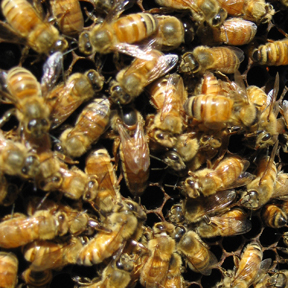
But when I checked her hive again the other day, I was dismayed. No capped brood + no larvae + no eggs = no queen. No Freeda. I could tell right away that her girls were squirrelly and unusually frantic. A bad sign. It was all I could do to hold in my tears as I pulled out frame after empty frame from the brood nest. Lest you think I am entirely sappy, I should clarify that Freeda is the queen bee I have had the longest relationship with. She has set the bar for all others. So I feel a particular bond with her. Her absence was palpable. (That’s her in the photo above – right in the center.)

A hive without a queen is not really a hive. I immediately ran through my options. I could get online and search for an available queen, paying an exorbitant price to overnight her to northern Wisconsin. Or better yet, I could call my good friend and bee guru Kris (who lives conveniently down the road) to she if has any of her northern hardy, queen stock to spare.

Another option would be to take a frame of eggs from Valerie’s hive and give it to Freeda’s girls so they can raise a new queen. A slower process by far, but one that is entirely amazing. Bees are the only species I know of that can dictate the outcome of an egg based on how they treat it. The majority of eggs in a hive develop into more female worker bees. But should the need for a new queen arise, the workers can feed an egg a special substance called royal jelly and raise a new queen from an egg that would otherwise become a worker bee. How and why they know to do this astounds me. But when it happens, you know it. Queen cells are very distinct. They look like full-size peanuts hanging off of an otherwise flat frame of brood.

I opted to stick a frame of eggs from Valerie’s hive in just for insurance, which also bought me a bit of time to check into my other options. I called Kris first. No queens. Drats. I did find a queen in Georgia that could be sent via UPS. But the cost coupled with the fact that I am heading off to the Boundary Waters for a few days of paddling, deterred me. The new queen might arrive in time, but if she was at all delayed, she’d spend a sad week on my doorstep and neither of us would be the better for it. So I have decided to let the bees take charge and run their own show. After years of keeping bees, I fully acknowledge that the bees almost always know better than I do. I might think I know, and as much as I might think they should be doing something differently, I’m really second fiddle to it all. My girls repeatedly remind me to relax and take a big step back from things. I love them for that.

Even so, I can’t help mentally wrestling with what might have transpired in the hive. The last time I looked, I found one fully developed, neatly exited queen cell in the hive. It’s possible that they decided to swarm. Which means that once the new queen cell was underway and developing, the older bees with Freeda in tow took flight from the hive in search of less crowded accommodations (a simply astonishing sight and sound to behold). After Freeda’s new daughter hatched (a solid two weeks from the egg stage) she’d have to leave the hive in order to complete a few mating flights. So it could be that I looked in on the hive on an afternoon when the new queen was simply out. The timing was perfect for this. It could also be that the new queen went out, but never made it back – leaving the hive queenless, and eggless. A bad combination. Or, for all I know, they were planning on swarming but something happened to Freeda before they could pull it off.

If pressed, I could probably provide a half dozen renditions of what might have happened. But eventually, after several whacks to the head, I realize that I don’t need to figure it out. The girls certainly aren’t asking me to. They’re forging on in whatever way they can. For my part, I am reminded yet again to step back and watch the mystery unfold. Maybe when I return home from canoeing and peek in the hive I’ll see that tell-tale peanut, signifying one of Valerie’s daughters is about to hatch. Or perhaps there will already be new eggs and larvae, indicating that Freeda’s daughter made it back to the hive to carry on the legacy. And it’s entirely possible that I still won’t have a clue. And that’s okay too. I can let it be.

packing a wallop

There is so much I want to write about that I almost feel tongue tied. I want to talk about our absolutely perfect July picnic to our favorite beach spot. And about how I just now learned to dry roast garlic from a Rick Bayless book. Or the fact that I have been spending every lunch break I can with my bees, anxious and worried about them. Oh, and it’s harvest time! The wood shed (a.k.a. garlic curing shed) is rapidly filling with rows of hanging garlic. Summer is in full force. Every day seems to pack a wallop. I don’t think the days could get any more full if they tried.

Don’t get me wrong. I love summer. I love the heat. I love eating out of the garden. I even love weeding the garden. I love wearing little skirts. I love seeing friend after friend, night after night. I love reading in the shade. I love live music in the park. I love floating on my back in Lake Superior. I love going into town for a butter-brickle ice cream. I love boating out to Long Island for cocktails on Wednesday nights. Trust me. I love it. But sometimes, sometimes – it’s. nice. to. stop.

And so I was comforted last Friday night when we went to have dinner with our friends Bob and Reba. They recently bought an adorable little farmhouse in Oulu, WI. Here’s what you need to know about Oulu. It’s pronounced “oo-loo.” It got its name from the sixth most populated city in Finland. Which is odd. Because Oulu, Wisconsin has a population density of 15 people per square mile, paling in comparison to the 260 per square mile of its namesake. As you might suspect, Oulu is pretty quiet. And just to make sure it doesn’t get passed on by, Oulu has a giant painted boulder on the side of U.S. Highway 2 with fancy blue script and an arrow pointing the way to town. But Oulu, I learned, has something else going for it. Oulu has great light.

From the moment we pulled into Bob and Reba’s driveway I was mesmerized by the light. It didn’t matter where we were – standing on the deck grilling monstrous grass-fed steaks, touring the quirky out buildings, retiring to the back porch for one last glass of wine – the light was spectacular. And I couldn’t help but to stop. Because the only way to really take it all in was. to. stop.

See what I mean?

Even without the light show, it was the quintessential summer evening. The season’s first tomatoes, comfortable friends, a couple bottles of wine, a leisurely walk through the fields, tuckered out pups. It was everything I needed to recharge my system.

But  before I go off to revel in my restored summer bliss, I do need to tell you about the garlic. Maybe I’ve been living in a cave, but it has never occurred  to me to dry roast cloves or whole heads with the skins on. But I tried it on Saturday (with Bayless’s encouragement) when I was making a smokey, spicy tomato sauce. And I was stunned at the flavor difference. Garlic roasted in the oven with a bit of olive oil comes out rich and buttery tasting. Which is not a bad thing–not at all. But a whole new world opens up with cloves that have been dry roasted. They slip out of their charred papery skins to reveal an entirely different earthy, toasty flavor. Perfect for salsas and sauces. If only I had a wise Mexican grandmother who could have turned me onto this method years ago. Ándale!

Dry Roasted Garlic
Break apart a head of garlic, leaving the papery skins intact. Bring a dry skillet or griddle (I used my wok) up to heat over a medium flame. Add the garlic and toss it occasionally while it starts to brown and char in spots. Remove from heat when the cloves start to get a little tenderness to them. The whole process should take about 10-15 minutes. Let cool, slip off charred papers and chop. You can also do whole heads, but I would be more inclined to try this over an open fire or on the grill instead of the stovetop.

the dirt dog

I had a milestone birthday last week. It was the big 4–0. My friend Jeremy turned forty a full week before I did, so at least I had someone to walk me through it. Jeremy’s main issue with it all was that people kept asking him how he was doing, and was he okay – as if he had just been diagnosed with some strange illness. If anyone had doubts about my health and well being they kept it well hidden. For the most part, I just found that people were extra special nice on to me on this particular birthday. To be honest, I thought turning forty was really pretty fun.

I decided to take full advantage of the occasion. I even played the “I deserve a big gift” card with my husband. But I’m embarrassed to admit that my heart’s one true desire upon turning forty was . . . was, well, a vacuum cleaner. Yes, I could have probably asked for just about anything, and I go and pick a vacuum cleaner. But a nice vacuum cleaner. The truth is, I love to vacuum. I find it immensely satisfying. Therapeutic even. The fact that the house gets clean in the process almost seems like an added bonus. But I’ve always been underwhelmed with the performance of my vacuum. For years, I’ve suffered from serious vacuum cleaner lust.

Mark went above and beyond the call of duty and even agreed to go vacuum cleaner shopping with me. He patiently stood by while I test drove various models, hemming and hawing over hose lengths and onboard attachments. In the end, I settled on a Dyson. And I LOVE it. It’s purple, it’s cute, and weighing in just shy of 12 pounds, it is extremely maneuverable. It’s relatively quiet, it sucks up pet fur like nobody’s business, it’s compact and easy to store. I often worried that my old vacuum had as much dust billowing out of it as it was taking in – not with the Dyson. There isn’t a single thing I don’t love about my new vac. Mark calls it the Dirt Dog. Loyal and eager to please. It might just be my new best friend.
I even got to try out my new toy a few days prior to my actual birthday. A handful of friends were coming over to celebrate with cocktails on the deck. True, we were going to be outside, but still, shouldn’t the rest of the house be clean too? Mark conceded and let me vacuum till my heart’s content. Bookshelves, couch, ceiling fan, floor vents. Nothing was safe from the reach of my new wand. With the vacuuming out of the way, I turned to the party food. I decided to keep it simple and settled on a few of my favorite finger food type hors d’oeuvres. Drinks to combat the hot weather were easy too – refreshing minty bootlegs and icy tart cherry cosmopolitans. Leaving only the cake to figure out.
I grew up with pineapple upside down cake. I’m pretty sure as a kid it was all about the maraschino cherries. But somewhere along the line, the rest of the ensemble grew on me too. I still love the unmistakable sweet tang of pineapple mixed with plain old vanilla cake. Plus, there’s no denying how fun and silly it is. Which is why I thought this would be just the cake to ring in my fourth decade.
Even though I was throwing a little party to celebrate, I pondered over how to avoid a big fuss over an actual birthday cake. And then it hit me. Cupcakes. Just the discreetness I was looking for. So I took my grandmother’s pineapple upside down cake recipe and modified it for the cupcake tin. I also decided for a more grownup approach with the cherries. I took a handful of fresh picked tart cherries and soaked them in rum and honey for a few days. I think it’s safe to say I’ve found my maraschino cherry replacement.
The cupcakes were adorable. I’m not sure I’ll ever go back to my standard skillet version. Each cupcake was so personalized with its mini ring of pineapple and cherry. And topped with a dollop of rum spiked whipped cream, theses little handheld cakes gave the typical wedge of cake a run for the money.
Pineapple Upside Down Cupcakes
Makes 16 average size (2 1/2″)  cupcakes

For the cherries:
16 tart cherries, whole and pitted
2 tablespoons honey
4 tablespoons dark rum

Mix rum and honey well and leave cherries to soak, covered, for 3 to 4 days.

For the topping:
4 tablespoons butter
16 teaspoons dark brown or muscovado sugar
16 pineapple rings
16 rum and honey soaked cherries

For the cake:
3 eggs
1 cup white sugar
1/4 cup reserved pineapple juice
1 teaspoon vanilla
1 1/4 cup flour
1 1/2 teaspoons baking powder
1/4 teaspoon slat

Preheat oven to 375º F. Grease 16 muffin wells with cooking spray or butter. Cut each tablespoon of butter into quarters to make 16 little cubes of butter. In each well, put a cube of butter and 1 teaspoon brown sugar. Pop the muffin pan(s) into the warm oven for a few seconds to melt the butter and sugar. Remove from heat. Depending on the size of the pineapple rings, slice anywhere from a  1/4″ to 1/2″ section out of the ring. Do a test ring to determine how much you need to slice out. The cut ring should lay neatly into the muffin well, sort of reforming a complete circle. Put a ring of pineapple in each well, followed by a cherry pushed into the center of each ring.

For the cake, separate the three eggs, reserving the whites into their own bowl. Beat the yolks until light and smooth. Add the sugar, pineapple juice, and vanilla. Beat until the sugar is well dissolved. Sift together the flower, baking powder, and salt. Stir into the egg mixture. Beat the egg whites until they hold soft peaks. Fold whites gently into the batter. Pour over the fruit, filling each well 3/4 full.

Start the cupcakes baking at 375º F and trun down the heat to 350º F after about 5 minutes. Bake for about 15-20 minutes until a toothpick inserted comes out clean. Remove from oven. After a few minutes, run a knife around each cupcake until they seem loose. Put a large cookie sheet on top of the muffin pan and carefully flip the whole works over to release the inverted cakes. Let cool.

For the spirited whipped cream:
I cup heavy whipping cream
1 tablespoon white sugar
1 tablespoon dark rum
1/2 teaspoon vanilla

Beat everything together in a cold mixing bowl until desired consistency is reached. But don’t do like I did on my birthday and almost make spirited butter instead.

another keeper

Finally. Something has diverted my attention away from the mighty garlic scape. The tart cherries are lining up for their moment of fame. And they are so excited about it that they are nearly bouncing off their branches. Our cherry trees are conveniently planted along the path we take to get to our cars and shed. Which means I almost always pop a few in my mouth en route. They are so tricky, those cherries. Sun warmed and fruity, but with a tang that makes your mouth stand up and say “Howdy!” Such a tease.

My new favorite smoothie is a simple affair involving kefir, a big handful of tart cherries, a spoonful of finely shredded coconut and a bit of honey to sweeten things up. Now that is a way to start the day.

But wait. Before I get all wrapped up with the cherries, I promised the sugar snap peas that I would put in a word for them. They were a little late to the party this year, but they are now coming on hot and heavy – as if to make up for lost time. We had our first official pea feast on Saturday night. I heated a couple of tablespoons of butter in the wok, added about a pound of stringed peas and seared them for a minute or so before tossing in a small handful of chopped thyme, sea salt and fresh pepper. I gave them one more minute on the heat to let everything meld and turned them out onto a platter. Then I blew the whistle and it was an all out, no holds barred situation at the dinner table. Yum.
Okay, where were we? Cherries, right. My friend Gina makes the most lovely tart cherry jelly. Ruby red and clear as glass. I knew I would love Gina forever after the first time I attended an annual Winter Solstice party that she and her husband Olaf throw each year on December 21. On the darkest and deepest night of winter, their house overflows with warmth, coziness and light. Heartfelt toasts with Aquavit – the Scandinavian “water of life” spirit – flow freely. It is truly a joyous night. But here’s how I really know Gina is a keeper. As each guest gets ready to depart into the cold winter night, she discreetly slips a small jar of tart cherry jelly into their hands. A little gem. A little ray of sweet light.
It’s been a good 8 or 9 years since my first taste of Gina’s cherry jelly, but I still remember it like it was yesterday. It was January. It was cold. Her cherries transformed my english muffin and my day. I was so inspired by it that I went up to my desk and composed a cherry haiku for her. And I have never missed a Winter Solstice party since. Which is a good thing for many reasons, one being that I don’t have the patience for making jelly. It just seems so fussy, with the straining and all. So I typically stick to the more unrefined, rustic jams and preserves.
Cherry season began as usual for me this year, with a batch of Cherry Honey Jam. But then I got a little crazy and made a zingy Cherry and White Pepper Preserve. And I think it is going to be a rising star in the kitchen. Just like Gina, this one’s a keeper. It’s such a simple recipe, but there is so much going on. The heat of the pepper and the intense cherry flavor mixed with just enough sweet to take the edge off. Zowie. I can already taste it on a pork tenderloin, smeared into barbecued ribs, or dotted on goat cheese crostini. Or how about a spoonful of it mixed in with a batch of stir-fried sturdy greens and garlic? And just think what it might do to a savory stuffed squash. I can almost not wait for the first brisk fall night when it seems right to try it. Almost.
I use Pomona’s Pectin for the jam and pretty much follow the recipe that comes with it. The preserve recipe is adapted from Sherri Brooks Vinton’s Put ’em Up! I used raw sugar instead of refined and also added a bit of honey. And I opted for white pepper instead of black. I thought its richer and spicier flavor might be a nice touch – and it was.
Tart Cherry Jam
From Pomona’s Universal Pectin
4 pounds of tart cherries (for 4 cups mashed fruit)
1 cup honey (more or less to taste)
2 teaspoons pectin Pomona’s pectin powder
2 teaspoons calcium water
Makes approximately 4 – 5 cups
Wash and sterilize your jars. Clean the cherries if necessary and stem and pit them. There is no denying that this is a bit of a messy job – the deck is a perfect place for it. Lightly crush the cherries with your fingers or a fork. You want to end up with 4 cups of mashed cherries and juice. Place cherries in a non-reactive pot over low heat, and add the calcium water to the fruit. Measure room temperature honey into a separate bowl and stir in the pectin powder.  Bring the cherries to a boil. Add the pectin-honey mixture and stir vigorously for 1 – 2 minutes to dissolve the pectin and honey. Return mixture to a boil and remove from heat. Ladle into prepared jars, leaving about 1/4 inch of headspace. Attach sterile 2 piece lids and process in a boiling hot water bath process for 10 minutes. Remove jars from canner, label, and store in a cool dark place without rings.
Cherry and White Pepper Preserves
Adapted from Put ’em Up!
3 pounds of tart cherries
1 cup raw sugar
1/4 cup honey
1/4 cup lemon juice
1 teaspoons fresh ground white pepper
Makes approximately 3-4 cups
Wash and sterilize your jars. Put 2 or 3 small saucers in the freezer. Clean the cherries if necessary and stem and pit them. Again, I recommend somewhere outside for this job. Place cherries in a non-reactive pot over low heat, stirring and lightly crushing the fruit a bit. Add in the sugar, honey, and lemon juice and stir until the sugar dissolves. Raise the heat to medium-hot and bring to a boil. Once boiling, adjust the heat to keep the mixture at a nice boil and cook for about 25 minutes. Give it a stir every now and again to make sure nothing is sticking. After 25 minutes  you can start testing for gel set. To test for set remove pan from heat and put a spoonful of fruit on one of your frozen saucers. Return the plate to freezer for about a minute, then take it out and run your finger through the fruit. If it wrinkles or shows the slightest bit of resistance, the preserves are good to go. If the fruit is still runny and loose when you slide your finger through it, return the pan to heat and boil for another couple of minutes. Test again and repeat if necessary. Timing will vary depending on the amount of natural pectin in the fruit. Once gel set is reached, remove from heat, ladle into prepared jars, leaving about 1/4 inch of headspace. Attach sterile 2 piece lids and process in a boiling hot water bath process for 10 minutes. Remove jars from canner, label, and store in a cool dark place without rings.

young love

Dear Dilly Beans,

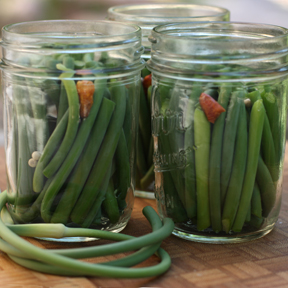
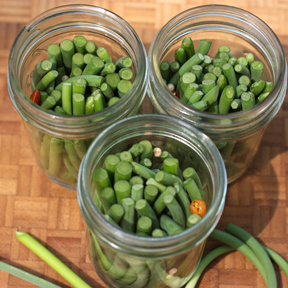
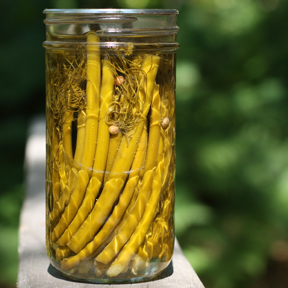
I thought you should know that I’ve met someone new. And I’m positively smitten. Please know that it’s nothing personal. I still care for you. Really, I do. It’s just I’ve found someone who shares your same crunch, your same tang, and that fine dill flavor – but with so much more to offer. These beauties also have a subtle, well rounded garlic flavor packed into their jars. And to be fair, well, it’s because they are garlics. Garlic scapes anyways. I think my new love and I have a promising future together. I can see them on antipasto platters, mixed into salads, and bobbing around in tomato-based cocktails. And I’m already dreaming of the cold, dreary March afternoon when I pop the lid and start eating straight from the jar. I hope you can take comfort in the fact that without you, my dear Dilly Beans, I might not have ever even discovered my new crush. So I promise to make room for both of you on my plate. I only hope you can wait until my dilly scape honeymoon is over.

Sincerely,
Garlic Pig

It’s true. I’ve fallen for another. I was sort of set up though. It all started a week or so ago when I was reading through one of my latest favorite books (in preparation for kimchi and kraut season), Wild Fermentation by Sandor Ellix Katz when I came across his father’s recipe for classic dilly beans. Here’s where things start to get sticky. I knew there was a few pounds of fresh picked scapes waiting in the fridge. Hmmm. I did a quick google search that revealed that I wasn’t alone in my wayward ways. There are a handful of people out there who share my same wild thoughts.

Next, I went to my tattered copy of the Ball Blue Book of Canning and compared dilly bean recipes. I settled on a combination of the two recipes and got to work. I rationalized that it wasn’t intentionally going astray. I mean let’s be honest, the green beans are weeks away from being ready. I couldn’t have pickled them if I wanted to. I just settled for the next best thing, that’s all. How can I help it if I happened to fall head over heals?

Pickled Dilly Scpaes

1 pound fresh garlic scapes

1 1/4 cup water
1 1/4 cup white vinegar
2 1/2 tablespoons kosher salt

whole white peppercorns
dried hot chilies (I used bird’s eye)
fresh dill – heads or leaves, or a combination

Gather, wash, and sterilize your canning jars. If you really pack the jars tightly, one pound of trimmed scapes will fill about 36 ounces of jar space. I did a combination of 8 ounce, half pint jars and taller 12 ounce jars. If you don’t plan on doing a tight pack, you will need more jars AND more brining liquid, so plan accordingly.

Wash and dry the scapes (if necessary) and trim the tops, just below the bulging flower head. Do I need to remind you to save the tops to make a stock with? I didn’t think so. Next, do a quick jar measurement and trim the scapes to fit into whatever size jar you have chosen so there is about 1/2 inch of headspace. After you have trimmed all the scapes to size, pack them into the sterile jars, sort of bending out the curvy parts as you go. Add 1 fresh dill head (or leaves), 1 dried chili pepper and 2-3 peppercorns to each jar.

For the brining solution, bring the water, vinegar, and salt to boil in a saucepan and remove from heat after salt has dissolved.

Pour the hot brine into the jars, filling until there is 1/4 inch of headspace. Secure sterilized 2 part lids and process in a boiling hot water bath for 10 minutes. Remove from canner, let cool, label jars and store without bands for at least a few weeks to let the flavors develop.

here’s to exceptions

We skipped the Fourth of July fireworks this year. And the parades. And the community potluck. Instead, we stayed home, seared a rib eye on the grill, tossed up a fresh Cesar salad, cranked some Rachmaninov, and watched a perfect banana moon rise through the trees. If I had it my way, this is how we’d spend every Fourth of July. I’m just not a crowd person. Except for the Minnesota State Fair. I bend the rules for that. It’s in my blood. (48 days and counting).

The flowers have finally started blooming, which made for a very nice, very quiet firework display on our deck. The garlic scapes put on quite a show as well. They went all out, slathering themselves in a beer batter and then hoping into a pan of hot oil for the grand finale. And my, oh, my. They truly outdid themselves. But first, I need to tell you that I really don’t get into deep frying. I have a small kitchen, a finicky gas stove, and a lack of good ventilation. None of which is conducive for deep frying. Still, I lust after buttermilk fried chicken recipes and dream of all the summer tempura possibilities. Occasionally, on cold winter mornings especially, I’ll cave and turn out a batch of steamy honey donuts, but other than that, I don’t fry.
Until now. Now, I might have another exception on my hands. I’m full of them lately, aren’t I? You’ll be glad though – I promise. Light and crunchy on the outside, warm and creamy on the inside with just a tease of garlic flavor. I’ve been on a garlic scape cooking craze lately, and making something festive for our Fourth of July meal felt like the right thing to do. I pilfered my stash of “maybe, someday, after I’ve built myself an outdoor kitchen, I might actually fry something recipes” and pick and chose from them to come up with a good old-fashioned beer batter. I also mixed up a quick tamari dunking sauce which was a perfect match for these golden beauties.
So go on! Get yourself some scapes at the Saturday market. And then shed any frying fears you might harbor and give these a try. They are so very worth it.
p.s. Buy some extra scapes while you’re at it. Pickled Dilly Scapes are up next!
Beer Battered Garlic Scapes
1/2 pound fresh garlic scapes
spoonful rice flour
salt and pepper

1/2 cup rice flour
2 teaspoons cornstarch
1 small egg, beaten (or half of a large egg)
few dashes of Tabasco
up to 1/2 cup flat beer
oil for deep frying (Be sure to use something with a high smoking point. I used a combination of canola and peanut oil)

Trim the tops of the scapes just below the bulge (save the tops for soup stock if you wish). Give scapes a rinse under water and pat off most of the moisture with a towel. Toss them in a bowl with a spoonful of rice flour. Season generously with salt and pepper.
In a large, shallow dish, mix together the flour and cornstarch. Whisk in the beaten egg, tabasco and enough beer to make a thick batter.
Pour enough oil to reach an inch or two of depth into a heavy, deep sided pot, suitable for frying. Attach a thermometer and heat the oil to 375º F. Adjust the heat as you go to keep the oil as close to 375º F as possible, and be wary of hot oil and spatters. Dip the lightly floured scapes into the batter and use you fingers, if necessary to help coat the scape. Depending on the size of your pan, you can probably fry 2-3 scapes at a time, but be sure not to overcrowd them. Lower the scapes in the hot oil. Cook for a minute or two until they are golden brown, flipping once. Remove to a paper towel line platter. Continue battering and frying the scapes in small batches. Serve warm.
Serve 2

Tamari Dipping Sauce

3 tablespoons rice wine vinegar
1/4 cup tamari
1/2 teaspoon sugar
1 teaspoon toasted sesame oil
1 scallion, finely chopped
few strips of julienned carrot

Mix vinegar, tamari, sugar, and sesame oil in a small jar and shake lightly or whisk until combined. Pour into serving bowl and sprinkle with scallion and carrot. Adjust flavors if necessary.

the great e-scape (project picnic.4)

I have good news people. It’s twirly-dip season. More commonly known as garlic scape season. I adopted the twirly-dip nickname many years ago, long before I knew my garlic plant anatomy. I now know that the “scape” is really a flowering seed head. It’s the garlic’s natural way of reproducing. Each flowering pod contains a handful of “bulbils,” a fancy name for itty-bitty garlic cloves. If left to its own devices, the garlic scape matures and waits for its bulbils to be scatterd. Assuming all goes well, each bulbil matures into a small head of garlic the following year. And yes, humans can do the same thing and intentionally plant the bulbils, but it takes a good three years of planting and replanting the resulting cloves of garlic to get a decent size head. Still, that’s pretty cool.
Now, back to the botany lesson. About a month or so before the underground bulb fully matures, a garlic plant heeds the call to send up a flowering scape. It starts as a little sprout emerging from the top part of the plant. Over the course of a week or so, it begins to lengthen and curl around into a spiral. Hence the “twirly-dip” terminology. It really is a thing of beauty. Left intact, the curlycue will eventually straighten itself back out and shoot skyward. The garlic plant puts energy into developing its seed head – at the expense of the bulb below ground. Which means if large, plump heads of garlic is your goal (and you’re willing to do the work of the bulbil), then trimming the scapes off is in your best intrest. To me this is a win-win situation. My garlic heads grow larger, and I’m left with a culinary treat that is especially fun to cook with. Which is pretty much how I spent my entire holiday weekend. You have been warned. Prepare to be inundated with garlic scape recipes.
But first, let’s cover a few garlic scape practicalities:
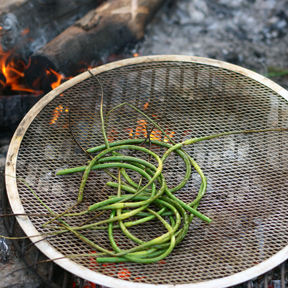
1. If you’re harvesting scapes from your own garden, it is best to pick them when they are in full curl, between 1/2 and 3/4 turn (like in the photo above). If you pick them too young, it potentially shocks the plant and may cause secondary sprouting or formation of side cloves off the main bulb. If you wait until they start straightening out, the stalks will be tough and unappetizing. Trim or snap the scapes off just above the top leaf of the plant.
2. Scapes store well – up to 3 weeks in the crisper drawer. So if you come across a source, stock up! For those of you with your own garlic patch, consider yourself lucky. Otherwise, scapes are becoming more and more popular and can often be found this time of year at farmer’s markets and natural food stores.
3. When cooking with scapes, it is best to trim the actual seed pod off and use the section of stalk below it. In other words, you want to cook with the portion of the scape that emerges from the top of the garlic plant to where the seed pod starts to bulge out. The top part of the scape is more grass like and stringy. There is no harm in eating it, but you might find yourself doing a considerable amount of chewing. Plus, there is a much better use for them. Slow simmered with water, a splash of white wine, a few greens, and a handful of fresh herbs, they make a lovely garlic soup stock. I keep a bag going in the fridge and when scape season comes to an end I make a big pot of stock for the freezer. Full recipe forthcoming…
4. Left raw, scapes are tender and garlicky, but are less pungent than an actual clove of garlic. Finely chopped, they make a lovely addition to green salads, egg salad, tuna salad, any salad really. Think of them like a scallion. When cooked, the scapes become creamy and nutty, with just a slight hint of garlic flavor. Which makes them perfect for stir-frys, fritattas, scrambled eggs, and pasta dishes. It’s important not to overcook them though, as they tend to get tough.
My first scape harvest of the season almost always goes straight over hot coals. This is my favorite way to prepare them. Toss them with a little olive oil, fresh pepper and sea salt and lay them on the grill or fire pit. I use a finer mesh screen over the grate to save anyone from an untimely death. It takes about 8 – 10 minutes for them to soften up and get a little char. Turn them once or twice and when they look tender, transfer to a platter, give them a squeeze of lemon juice and a sprinkle of chili pepper flakes. If you’re anything like me, they will disappear faster than one would think possible. (You’ll see in the photo that I have grilled the whole scape, even though I just got through telling you to cut the top part off. I almost always follow my own advice, but still there is no denying how artistic the entire scape looks – sometimes it’s fun just to cook the whole package).
Once I get the craving for grilled scapes out of my system, I move onto other things. This year I decided to start with garlic scape pesto. Mixed with some chunky penne pasta, it was the star of our June picnic. Actually, I take that back. The real star of the picnic was a thunderstorm, complete with green skies, quarter size hail, and straight line winds. Mark and I had decided to take an “extended picnic” and turn it into an overnight camping excursion. We packed our picnic tin, loaded the kayaks on the roof, threw in a blanket and some books, and headed for Lake Superior’s Bark Bay. We managed to score a tent camping site on the Herbster beach and geared up for a much needed day of play.
Well fortified with pasta bathed in twirly-dip pesto, we ventured out for a late afternoon paddle on the lake. Sunny skies, slight breeze, calm waters. All good. Back on land we had just settled in with gin and tonics (car camping has its merits) when we noticed some ominous clouds gathering off to the southwest. Sure enough a few minutes later the county sheriff was easing his way though the camp ground alerting campers of a severe weather system on it’s way from Superior. We packed things up as best we could and headed for the tent, fully expecting to resume our evening after the storm blew through.
But there was the problem. The storm didn’t exactly “blow through.” The traveling warm air mass hit the cool wall of Lake Superior and stopped – for a good long while. We laid in the tent, watching the sky outside do amazing things, occasionally exchanging a silent worried look, and listening to the sound of hail ricocheting off of our poor little picnic tin. I didn’t have high hopes.
Hours later we emerged from our abode (which was still standing and still mostly dry inside) to assess the situation. It was dark now and still raining, but the brunt of the storm had finally passed. Lake Superior was positively roaring. We learned that the majority of tenters had been evacuated to the local high school for the night. We also heard rumors of another cell coming through at 4:30 a.m. Hmmm. This news prompted us to do something we have never done before while camping. We decided to plan our escape. Mark went for the car while I packed up the sleeping gear. We rolled up the tent into a sopping heap, threw it in the back of the car and drove the 30 minutes back home. I was stunned to find the picnic tote still dry inside. We had a late night snack and retreated to the quietness of our bedroom.
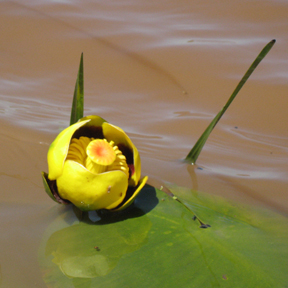
We awoke to sunny skies, refreshed and ready to resume. With a thermos of coffee for the road we made the return trip back to our boats and other belongings. As we suspected, the bay was a churning chocolate brown soup and the campground was littered with upside down tents drying out (some considerably more worse for the wear than others). After a hearty breakfast we headed out for a paddle through the Bark Bay Slough – a costal barrier spit and lagoon that feeds into Lake Superior. Water lilies were blooming, dragon and butterflies were out joy riding, and we enjoyed several fine turtle sightings as we paddled our way back towards land. What a way to ring in the season’s first twirly-dips!
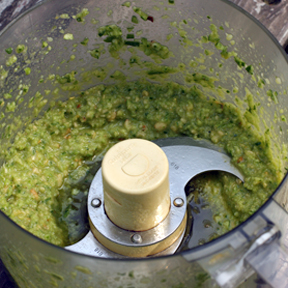
I should warn you that this pesto is indeed garlicky. To me though, it strong and flavorful without an overbearing garlic heat. I love to eat it straight on salty pita crackers or bread. It also works well to cut it with créme fraîche, yogurt, and/or sour cream and use it as a vegetable dip or pasta sauce. And, like most pestos, it freezes well for an excellent winter treat – or pull it out even sooner and pair it with fresh summer tomatoes. I adapted this recipe from one I found in the Washington Post several years ago. I find it works best to use a food processor to really grind up the scapes and nuts. But if you’ve got determination, you could do it by hand with a mortar and pestle.
Stay tuned. Recipes for pickled dilly scapes, beer-battered scapes (oh-my!), and garlic soup stock are on their way later this week.
Garlic Scape (twirly-dip) Pesto

1/2 cup garlic scapes, chopped, flower portion removed (about 10 scapes)
1/3 cup almonds or walnuts
1 teaspoon lemon zest
squeeze of fresh lemon juice
1/3 – 1/2 cup olive oil (I use more oil if the pesto is going over pasta)
1/2 cup grated Parmesan
large pinch of sea salt

Process the scapes, nuts, lemon zest and juice in a food processor until they are somewhat smooth and the texture is to your liking. Slowly drizzle in the olive oil, pulsing the machine as you go. Use a spatula to scrape down the sides and fold in the Parmesan and salt by hand. Taste and adjust seasoning as needed. Makes about 1 cup.

exploding happiness

My college roommate Jennifer worked her way through school with a part time job at a balloon shop. She spent her Saturday afternoons blowing up and delivering wild helium filled bouquets. Jenn often returned from work and adorned the apartment with colorful, stray stragglers. It was generally a very happy place. It didn’t happen too often, but every once and a while, if there was a big mix-up on an order, she’d arrive home with a whole carload of balloons. I loved the occasional big mix-ups. We had a big mix-up routine.

We’d toss our rollerblades in the trunk, drive the few miles over to St. Paul’s Como Lake, and get to work. Dividing the bunch in half, we’d set out in opposite directions around the lake path to bestow our wares on random strangers. People loved it. Everyone smiled. Couples, little kids, adults – even surly teens. We’d meet up again in the middle, empty handed, and skate back to the car. Sure, it was fun handing them out, but the best part came when we turned back to see all those colorful balloons bobbing their way around the lake. Mission accomplished.
I am proud to report that Jennifer now wears latex on her hands instead of filling it with helium. She is a successful dentist in Anchorage, Alaska. Yup, those balloons saw her all the way through dental school. Sadly, we haven’t seen each other since my wedding, but I still think of her fondly. Especially when I have something really happy to share with the world. Which happened to be the case the other day. I wanted to make a simple treat. Nothing complicated, nothing too heavy or too sweet. You know, just a little smackerel of something for tea time. I should note that it actually got warm enough this week to brew a jar sun tea. I wanted to celebrate with the perfect accompaniment.
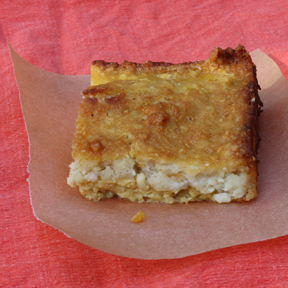
I decided to try making some sort of honey bar. And the result was everything I was looking for. They are light and custardy and subtle. There is nothing fancy about them. They aren’t even particularly memorable. But when I bite into one, I feel good. Like a little bit of happiness just exploded in my mouth. And then it’s gone – almost as quietly as it came. But sometimes that’s okay with sweets. I imagine this is the sort of bar you could hand out to just about anyone and they would like it. You don’t have to worry about people who don’t care for nuts, or lemon, or berries, or chocolate (people like that don’t really exist, do they?). My rollerblades and I parted company many moves ago, but If I still had them, I might even set off around the Bayfield peninsula with a pan of honey bars in tow to test my theory.
I’m not sure exactly what occurred during the baking process, but it is almost like the crust and the filling traded places. Still it works. And the bars are just firm enough that you can pick them up and eat them with your hand. Next time I might even double the crust and push it further up the sides of the pan.
Happy Honey Bars

The crust:
1 cup flour
3 tablespoons sugar
pinch of salt
pinch of fresh nutmeg
6 tablespoons butter, cold and cubed
spoonful of ice water

The filling:
1/2 cup honey
3 tablespoons butter
4 eggs
2 teaspoons vanilla extract
pinch of salt
pinch of fresh nutmeg
1 cup milk

Crust: Preheat oven to 350º F. Combine the flour, sugar, salt, and nutmeg in a medium mixing bowl. Cut in the butter cubes, mixing until it is fully incorporated. Sprinkle in a small splash of ice water to the dough and mix again. Press the mixture into an 8×8 nonstick pan. Bake for 15-20 minutes until crust is lightly browned. Remove from oven and let cool. Turn the oven up to 400ºF.

Filling: While crust bakes, warm the honey and butter in a small sauce pan until it is warm and liquid. Transfer to a mixing bowl – I recommend reusing the crust bowl. Whisk in the eggs, vanilla, salt and nutmeg. Wipe out the sauce pan and slowly bring the milk to the point where it just almost bubbles. Remove from heat and slowly whisk the warm milk into the honey-egg mixture. When everything is well incorporated, pour the mixture over the pre-baked crust and bake in a 400º F for 25 – 30 minutes until set. Let bars cool before slicing.

the spinach chronicles

Evidentially, a large portion of this country has been busy breaking all sorts of heat records for June. National Weather Service meteorologist Jim Keeney reported in the New York Times two weeks ago that much of the U.S. is experiencing conditions that we normally don’t have until August. “The heat has been pushed north all the way into Wisconsin, and in the North especially, we are seeing temperatures 15 to 20 degrees above normal,” said Keeney.
Allow me to set the record straight. I can assure you that this “brutal heat wave” has not, in any way, shape or form, found it’s way past the Mason-Bibon line on into Northern Wisconsin. The south shore of Lake Superior has been officially chilly, wet, and grey for pretty much the last three weeks. I think there might have been a day in early June when the thermometer pegged at 66ºF, but it was so short lived, it’s hard to recall. The sun is out today, but we’re still hovering in the upper 50’s.
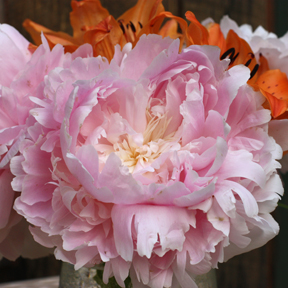
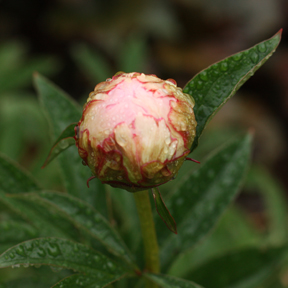
My peony bush has been poised and ready to bloom since the end of May, but it simply refuses budge in this weather. I go out and look at it every morning. And every morning, it looks the same. I can pretty much hear it. “No! I won’t!” I guess I don’t blame it. I haven’t exactly been frolicking around outside either. My first summer beach read of the season was devoured under the weight of two down comforters.
I can guarantee you that my sweet corn will nowhere near be knee high by the Fourth of July. Even the snap peas, who prefer it nice and cool, look miserable. They are slowly inching their way up the trellis – more out of duty than anything. Don’t even ask about the peppers. They are stuck in a wallow of self-pity. Really, the only thing in the garden that seems genuinely pleased with the current state of affairs is the spinach. But hey, I’ll take it. It’s been a cold, misserable, rainy June. At least I’ve got spinach to show for it.
My routine of late involves slogging out to the garden during breaks in the rain to keep the spinach picked and give the rest of the garden a rousing pep talk. I came in the other day with a big basket of fresh spinach, mixed with a few handfuls of tender little lamb’s quarter leaves, thinking that a steamy pan of lasagna would do nicely to take the chill off. Only I wasn’t sure if I had the energy to construct it. I like lasagna, but to be honest, I find it a bit exhausting. Generally by the time I am done, I have dirtied just about every dish in the house, the kitchen is a mess, and I barely have the strength left to eat. Still, my taste buds were having trouble pushing the notion of fresh spinach lasagna out of my mind. I quickly ran through the process in my head, searching for ways to simplify. No boil noodles, jarred pasta sauce, layer the veggies in raw, skip the Béchamel sauce. I rallied. Let the spring spinach chronicles continue.
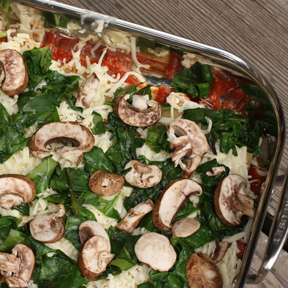
In the end though, I caved on several of my proposed simplification techniques. The mushrooms went in raw, but I did end wilting the spinach just slightly. It cost me another pan, but when I looked over a the heaping mound of raw spinach I was concerned it would be too bulky and unruly to layer into the pan. I could have opened a jar of pasta sauce, but I had some canned plum tomatoes too. I knew I couldn’t beat a simple sauce made with olive oil and fresh green garlic. Damn. Another pan. And how could I not use a white sauce with crimini mushrooms and all that fresh spinach? It would be a crime. What’s one more pan? But by golly, I held my ground with the no-boil noodles. One pot and one colander, saved!
The recipe looks long, but it’s really not so bad – especially considering that you end up with enough food to last you through the week, or to invite a few friends over at the last minute – which is what we did. I promise that it’s worth the couple of extra pots and pans (this coming from a woman who does not have running water). And it’s a perfect celebratory, feel-good kind of meal. Tuck it in your back pocket for a cool summer’s night dinner on the porch, or for fall – if you happen to be lucky enough to live somewhere that actually gets warm, or dare I even imagine…HOT.
Fresh Spinach & Mushroom Lasangna

12 ounces no-boil lasanga noodles (or enough to cover 3 layers in your pan)

The Red Sauce:
1/3 cup olive oil
1 – 2 stalks green garlic, chopped (or 4-5 cloves garlic)
3 teaspoons red pepper flakes
1 teaspoon salt
1 28 ounce can diced, fire roasted tomatoes
1 28 ounce can plum tomatoes, roughly chopped

Warm the olive oil in a sauce pan and and add the garlic, red pepper, and salt. Saute briefly until the garlic is just tender, but not brown. Add the tomatoes, juice and all and gently simmer for about 20-30 minutes until the sauce thickens up to your liking. Adjust the seasoning as necessary.

The Veggies:
10 ounces fresh mushrooms, sliced
14 ounces fresh spinach, washed and coarsely chopped (I used 12 ounces of spinach and 2 ounces of lamb’s quarter)

Lightly steam the spinach to wilt it – just for a minute or two. Or if you are feeling bold, you can try layering it in raw (let me know how it goes!)

The Ricotta:
2 eggs, lightly beaten
15 – 16 ounces ricotta cheese
1/4 teaspoon salt
1/4 teaspoon black pepper
1 bunch fresh chives, chopped

Combine all in a bowl and mix well.

The Cheese:
2 cups grated mozzarella
2 cups grated monterey jack

Combine together in a bowl.

The Béchamel Sauce:
2 tablespoons butter
2 tablespoons flour
1 – 1 1/2 cups milk
Salt, pepper, and nutmeg to taste

Melt the butter in a small heavy saucepan. Slowly stir in the flour, mixing with a fork or whisk. Keep stirring for 1 -2 minutes until the mixture just starts to brown and smells fragrant. Keeping stirring as you add the milk. Cook over medium heat, stirring often until the mixture thickens up, about 5 to 10 minuets. Remove from heat and season with salt, pepper, and a dash of fresh nutmeg.

Layer Up:
Pour a thin layer of the red sauce in the bottom of your baking dish. Follow with a layer of noodles, 1/3 of the ricotta mixture, 1/3 of the spinach, 1/3 of the mushrooms, 1/3 of the white sauce, and 1/3 of the grated cheese. Repeat the process to make 3 layers, ending with the grated cheese.

Bake in a 350ºF oven for about 40 minutes until the cheese is bubbly and slightly browned. Remove from oven and sprinkle with 1/2 cup fresh grated Parmesan cheese. Let stand 10 – 15 minutes before slicing.

enticing bears

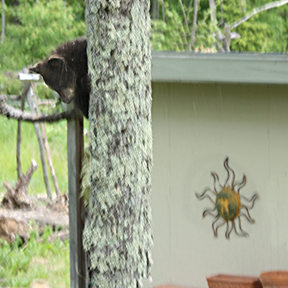
I was laying in bed the other morning debating the merits of getting up versus staying hunkered in for a few more minutes when I heard an unmistakable noise outside the front windows. It was the sound of “someone” getting into “something.” Debate over. I got up to investigate with Hoops the cat in tow and discovered a mama bear with two cubs rooting around our little shed. Mom was standing up on hind legs helping herself to the remains of an autumnal display window box that I hadn’t got around to cleaning out yet. The kids were busy sticking their noses into buckets and knocking over flower pots. The whole trio was adorably cute.

Hoops has seen his fair share of bears and there is a reason why he has lived to see 14 years. He retreated immediately and waited uncharacteristically patiently for breakfast to be served. Meanwhile, I fumbled with my camera, forgetting that it was set on full manual mode. Needless to say, most of my shots were as foggy as my morning brain. Photos or not, I decided watching the bears’ shenanigans was a delightful way to wake up and start the day. But when mom stood up tall to knock out a glass block window and junior started swinging from the window box, my husband Mark decided it was time to bust up the fun. He shooed them away. Mom ran off but the kids followed their instincts and went straight for the nearest tree. Eventually they shimmied down to chase after mom.

Coffee in hand and brain fully awake I headed out for a tour of the estate. I had foolishly left some bee equipment in the yard – most of which is now punctured with cute little claw and teeth marks. The bird bath was upturned and one of the pond plants had been uprooted. The goldfish looked nervous. I laughed. Basically, the yard and garden looked like the aftermath of a big ol’ party. A black bear party. It looked like a good time. I wish I could have attended.

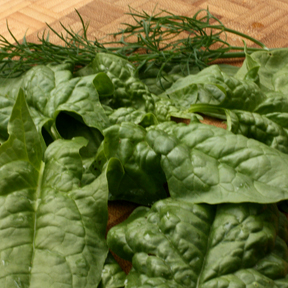
All in all, they were fairly well behaved guests. Sure, they chewed on a few dried up old gourds, sampled some flowers, and had a taste of what I can only imagine is divine smelling bee equipment. But the important thing is this: they didn’t touch the spinach. All three rows were upright and perky upon inspection. Which is good. Because I had designs on making my favorite spring spinach pie for dinner. The dill appeared to be in good shape too. Another point for the bears. I’m not saying I want our yard to become the new party shack or anything, but at least they had the sense not to mess with the spinach. I’ll give them that much.

Oh but if those bears only knew the potential that spinach holds. Combine it with some fresh dill, a handful of feta, a few eggs, a splash of milk, and turn it into a pie shell. Now there’s a party. With tender spring spinach and fresh dill, the flavors of this pie truly come alive. It has become one of those dishes that I look forward to making each spring. When the dill is big enough to safely pillage I know its time.

The recipe is adapted from Fresh Market Wisconsin by Terese Allen – a sweet little paperback cookbook that highlights Wisconsin’s best. Market growers and producers from around the state showcase their favorite ways to cook with fresh produce, fruits, berries, honey, maple syrup, wild rice, fish, meat and dairy. There are some real gems in it. And if there were ever a cookbook meant for a bear, I’m pretty sure this would be the one. I know it’s where I’d turn if I ever wanted to entice anybody back for another friendly backyard shindig. But, sorry bears. I promised Hoops I wouldn’t.

Spinach Feta Pie 

1 medium chopped onion, preferably a spring one
1 tablespoon butter or olive oil
10 ounces spring spinach, washed and chopped
6 ounces feta, crumbled
3 eggs
1 cup milk
2 healthy tablespoons fresh dill, chopped
1/4 teaspoon salt
1/2 teaspoon ground black pepper
1/4 cup fresh grated parmesan cheese
1 9-inch pie shell, unbaked *

Heat butter or oil in a large skillet and saute the onion over medium heat until soft and translucent.  Raise the heat to high and add the spinach. Toss and cook until the spinach has just wilted, about 5 minutes. Turn of heat and let the spinach cool for another 5 minutes. Sprinkle feta over spinach.
In a large bowl, whisk the eggs, milk, dill, salt and pepper together. Fold the spinach and feta into the egg mixture.
Line a 9 inch pie tin with the crust and sprinkle the Parmesan cheese over the bottom of it. Pour the filling into the crust. bake in a 350º oven for about 45-50 minutes until the center is just set. Do not over bake.
* A note on the pie shell: after trying many recipes and methods, I have finally settled on Alice Waters’ pie dough in The Art of Simple Food as my standby. It is easy, straightforward, and has yet to let me down. But a frozen store bought shell would work just as well.

instapig

No Instagram images were found.