Archive for the 'pig slop' Category


emergency tonic

My mom had an emergency appendectomy last week. Is there any other kind, really? My appendix decided to cash things in when I was seventeen. And it too was an emergency. In retrospect, the real emergency came several days after surgery. I was sent home to recover, but I never did. I have a vague memory of dad slinging me over his shoulder in a fireman’s carry and laying me into the back seat of the family toyota for a run to the emergency room. The details from there on out are sketchy at best. Being force fed what seemed like a considerable amount of chalky, white, nauseating barium is the only thing that really stands out. The rest is all hearsay. My intestine had twisted over on itself and to complicate matters, it had leaked. Infection was raging. A second surgery was ordered.

Evidently the prognosis was dire. Dire enough that my dad felt compelled to smuggle our family cat, Max, into St. Paul Ramsey Hospital. Here was a man who didn’t mess around. He knew just how to get to the core of things. He drove Max downtown, stuffed him into a soft sided brief case, rode up several flights in the elevator, and waltzed into my room. They didn’t stay long, but long enough. Somehow I managed to pull things off. Or rather my surgeon managed. I spent another solid week in the hospital, but eventually I got home. Home to Max. Home to my parents who nursed me back to life.

Needless to say, I was glad to learn of the tremendous technological strides that have been made in the world of appendectomies in the last 20 years. Three cheers for laparoscopic surgery. But medical advancements or not, I went to help my mom recover. She’s always been tough, and this was no exception. Her sturdy farm-girl roots shinned from the get-go. The surgeon made her promise to at least fill the pain prescription. She did, but the bottle sat in the bathroom, unopened. She was in and out of the hospital in under 24 hours. And once I got her home and settled in, I proceeded to do what seems to me like the obvious thing to do in almost any situation – I cooked.

I made silky parmesan risotto with mushrooms, creamy macaroni and cheese soup with roasted tomatoes on top, and a ginger chicken soup. I think everyone should have a reliable, cure-all soup recipe in their back pocket to pull out in times of need. And this is my new standby. It’s flavor is very grown up – not like any other chicken soup I have tasted. The broth is beautifully clear and infused with ginger. The chicken itself comes out amazingly tender and packed with the rich flavor of the broth. I know this is a tonic I will crave the next time I’m under the weather.
This recipe originated from Nina Simond’s A Spoonful of Ginger, but I found it in the Essential New York Times Cookbook. Hesser’s version calls for Shaoxing rice wine, which I didn’t have, so I subsistuted sake – and would do so again. I loved the flavor. Depending on the situation, I can see serving just the broth by itself or with the chicken loosely shredded into the soup, which is what my mom and I did. There was plenty of left over chicken for other uses. In fact my mom told me tonight that she ate the last of it in a kung pao chicken.

Clear Steamed Chicken Soup
Adapted from the Essential New York Times Cookbook

One 3 1/2 pound chicken cut into 10 pieces, trimmed
(I opted to remove a good deal of the skin, but left some in tact for flavor)
1 3/4 cups sake
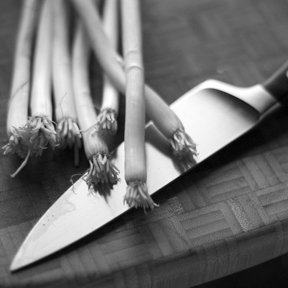
10 scallions, trimmed and smashed gently with the flat blade of a knife
12 quarter-sized discs of fresh ginger, smashed with the flat blade of a knife
6 cups boiling water
1 teaspoon salt
Chopped scallions for garnish

Heat the oven to 425ºF. Fill a pot large enough to hold all of the chicken pieces with water and bring to a boil. Blanch the chicken pieces for one minute and drain.

Combine the everything but the salt in a Dutch oven or casserole with an oven prof lid. Cover tightly with aluminum foil, then place the lid on top. Pour an inch or two of boiling water into a roasting pan that is large enough to hold the pot of chicken. Place the pot of chicken in the hot water bath and put the whole shebang in the oven for 2 hours. Check the water level in the roasting pan and replenish with more boiling water if necessary.

Once the soup is out of the oven, skim the top to remove the fat. Remove the scallions and ginger. Add salt and adjust to taste.

Add a handful of loosely shredded chicken to each bowl. Serve the hot broth sprinkled with scallions.

project picnic

My sweetie and I have never really gotten into giving gifts on Valentine’s Day. We exchange valentines for sure – Mark has won my heart with his brown paper bag valentines dressed up with nothing more than a sharpie. Truthfully I think the first year he made that style he was in a pinch and managed to pull off something quick. But it was charming. So much so that now I’ve come to love and expect them. This year he went all out. He found the stash of construction paper at school.

I almost always make a plate of pretty pink cut-out cookies. Or sometimes a tray of coconut cupcakes dotted with tacky conversation hearts. If the ice road over to Madeline Island has formed by the 14th, we’ll set out for one of our favorite restaurants, Lotta’s, for a deliciously romantic meal. But we’re just as happy to stay in, cook something simple, and light a few candles. As it happens this year, the ice road was open, but Lotta’s was not. So instead, I made Cacio e Pepe and served it in cute little baked parmesan bowls. A spinach salad with chopped egg and a tangy lemon mustard vinaigrette, a bottle of wine, and we were all set. It was a photo worthy meal, but in an effort to be the teeniest bit romantic, I refrained from bringing my camera to the table. I snuck back later and took a dessert shot instead.

But this year, there was something else at the table. A present for Mark. Curiously, it’s something that I have longed after for a long time. A good old-fashioned picnic basket. I love picnicking. What can top finding a few new salads to try out, rounding up some good cheese and fancy snacks, packing a blanket, a fresh magazine – or maybe the Sunday crossword, and heading somewhere outdoors to take the afternoon off? It’s something we don’t do nearly enough of.

In an effort to inspire us, I found an old metal picnic tote on Etsy. I outfitted it with enameled plates, bistro-style tin wine glasses, outrageously miniature salt and pepper shakers, stripey napkins, and some odds and end silverware. I also threw in a book of Pablo Neruda love poems. Then I made 12 cut out hearts, each with a different picnic destination on it – one a month. Seems like a reasonable goal, doesn’t it? My proposed settings range all over – from Potato River Falls (where you can lounge about in waterfall filled pools), to the top of Mt. Ashwabay (our local ski hill that has a stellar view of Lake Superior), to my mom’s cherry orchard, to our living room floor (I figure we might need an inclement weather back-up).

I agree with Alice Waters’ in her Art of Simple Food when she claims our taste buds are enlivened in the open air. And who out there couldn’t use a little more R&R and change of pace in their routines? I for one am looking forward to reviving the fine art of picnicking. I can’t wait to round up and create some picnic worthy recipes to share with you as we take our monthly adventures. I welcome anyone who wants to join me on project picnic and share their experiences. I’d also love to hear any good local picnic destinations if something comes to mind!

switching gears

I had my first Dark Days cooking flop of the challenge last week. I’ve been struggling to come up with a few more vegetarian options for our 50-mile radius meals. Don’t get me wrong, I love our local meat. I feel so lucky to have a freezer full of pork, chicken, beef, lamb, and bison – all raised by people I know, trust, and respect. But it seems like most of our weekly Dark Days meals are meat-centric. And as a former vegetarian, I still harbor a penchant for meatless chow. The DD challenge has got me realizing that with the exception of wheat, we don’t really have anyone in our neighborhood producing dry beans or other grains.

With that in mind I decided I had better embrace the one grain I can get locally. I set out to create a hearty wheat berry salad. Picture roasted pumpkin cubes dressed in maple syrup with pinches of cardamon and cinnamon. Mix in some garlic sautéed in saffron butter, toss with the warm wheat that has been simmering in homemade veggie stock all day, and top it off with a heap of caramelized onions. Oh, and maybe add a few little smudges of local chev to each bowl before serving. I was feeling pretty cozy just dreaming it up.
In an effort to try something extra good for us, I decided to sprout my wheat berries a few days before making the salad. According to Sally Fallon – who has yet to steer me wrong – spouted grains and seeds are substantially healthier for us. In her book Nourishing Traditions, she says that the process of germination produces vitamin C, increase vitamin B content, and can raise the carotene level up to eight times that of unsprouted grain. Reading this bit of news really got me going. It’s the middle of February in northern Wisconsin, bring on the carotene! Fallon goes on to explain that even more importantly, sprouting neutralizes the phytic acid found in the bran of all grains which inhibits the absorption of all sorts of good minerals (calcium, magnesium, iron, coper, and zinc). And if that’s not enough, she also tells us that the spouting process creates a number of good digestive enzymes. What’s to lose, I think?
I soaked my canning jar of wheat berries over night, drained them in the morning, and proceeded to tend them diligently for the next 2 days. Which basically meant giving them a rinse a few times a day and turing the screen lidded jar back upside down to drain and breathe. Extra health benefits or not, it was absolutely thrilling to have something living and growing in the kitchen windowsill. And perhaps my zealous green thumb is what got me into trouble. I think I over sprouted.
I refrigerated the sprouts after just 2 days, even though the instructions said it would take 3 or 4. In retrospect, they did seem a little lanky, but when it came time for Dark Days Meal 10, I proceeded as planned and followed Fallon’s cooking instructions of a slow oven simmer. All afternoon a cross between the smell of freshly baked bread and simmering stew wafted up the stairs to my office. When I couldn’t stand it any longer, I went down to taste the wheat. Here’s where the trouble started. The flavor was good, but the texture was chewy. I mean really chewy. No amount of masticating seemed to break down the sprouted ends of the wheat. Maybe it was just me, I thought, and hopefully returned the pot to the oven. But when Mark got home from work, I did the ultimate test. I gave the man who will eat nearly anything without complaint a bite and waited for his reaction. He was nice enough about it, but I knew I was going to have to switch gears for Meal 10.
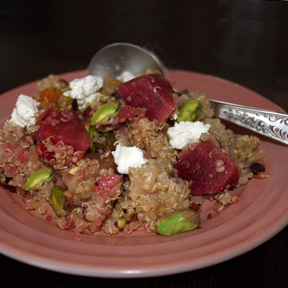
We were down to the wire on time and I need something quick. So I made the culinary leap from Maple Hill Road in Washburn, WI all the way to South America and grabbed one of my favorite grains off the pantry shelf – quinoa. It’s light, it’s fluffy, it’s nutty, it cooks up in 20 minutes. Perfect. Except suddenly my sweet pumpkin, garlic, and caramelized onion concoction seemed too heavy. I had also roasted a tray of beets that afternoon, which were now quietly resting in a splash of olive oil and red wine vinegar. These seemed like a better fit. With the exception of the quinoa, I kept things mostly local, but I did get a little carried away with the dressing. Since I had to leave my big, bold pumpkin behind, I comforted myself with something tangier and more perky. Which means I added lemon juice and fresh ginger to the dressing. And then, at the last second, I couldn’t resist tossing on a few bright green pistachios that I had on hand. Just the sight of them mingled with the pink beets made me a little less glum about my sprouted wheat debacle.
I still plan to try my “pumpkin berry” salad and will even give the carotene packed sprouted wheat a second chance. I checked back and Fallon does say not to let the sprouts get beyond 1/4 inch. So I’m guessing that’s where I went wrong.
I felt like I should have jumped right back on the indigenous horse and done something particularly noteworthy for Dark Days Meal 11, but Mark and I were both rebounding from mid-winter colds. We were tired and unenthusiastic. Nothing sounded better than a plate of blueberry waffles with a side of thick, Hermit Creek Farm bacon. Even though I had local flour and milk on hand, I was feeling so lazy that I opted for the jar of Sturdiwheat pancake & waffle mix from the pantry – which is actually somewhat local, especially coming from my mom, who lives just down the road from Red Wing, MN where it is made. And I have to say that the mix beats out many of the recipes I have made from scratch. Sturdiwheat blends some of the outer wheat bran back into the mix, which yields an especially flavorful waffle. To make us feel even better, I served them on my grandma’s prettiest flowered plates.
Dark Days m.10
Not Really Local Warm Beet Salad
Beets and shallots (cold storage, via our garden), chev cheese (Sassy Nanny, 30 miles), quinoa (most likely South America), olive oil, ginger, lemon juice and coriander.
For the beets:
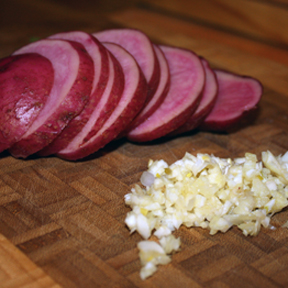
Wash and trim one pound of beets. Leave part of the top and skin intact. Put whole beets in a covered baking dish, adding enough water to cover the bottom of the dish to about 1/8th inch. Cover and bake in a 350º F oven until beets are tender – about 45 minutes to an hour. Uncover, cool, cut off what is left off the tops and slip off skins. Cut bets into wedges or cubes and sprinkle with 1 teaspoon of red wine vinegar and a dash of salt. Let stand a bit and then toss with about 2 teaspoons of olive oil.

For the quinoa:
Bring 1 cup quinoa and 2 cups water to a boil, reduce heat, cover, and simmer about 20 minutes until water is gone and quinoa is tender. Set aside.

For dressing whisk together:

2 tablespoons olive oil
2 tablespoons fresh lemon juice
1/2 teaspoon ground coriander
1 teaspoon fresh grated ginger
2 tablespoons finely minced shallots

In a large bowl, stir together the quinoa and beets, pour dressing over stir to combine. Sprinkle with toasted pistachios and crumbled goat cheese.

Dark Days m.11
Waffles for the Queen of Heaven
Sturdiwheat (Red Wing, MN, 208 miles – or 18 miles for my mom), blueberries (Blue Vista Farm, 2 miles), yogurt and cultured buttered (homemade from Tezner’s milk and cream, 15 miles) maple syrup (Andy and Linda’s sugarbush 19 miles), bacon (Hermit Creek Farm, 29 miles). 

Top piping hot waffles with butter, yogurt, blueberries, and maple syrup.

take out a chicken

I got the very best sort of e-mail from my husband Mark last week. The subject line said “take out a chicken.” The body contained just a link. I clicked it, gave it the once over, and eagerly proceeded to the freezer to pull out one of our Pasture Perfect Poultry chickens (of which I can’t speak highly enough – and I am not an overly huge fan of chicken). And then I waited for it to thaw. Finally, on Thursday evening, I had Mark do the dirty work of piecing up the chicken while I got the marinade ready for an overnight soak.

It felt like Friday night would never come. But five o’clock eventually rolled around and I took the opportunity to mix us a couple of my favorite winter time cocktails – a shot of Sailor Jerry’s mixed with grapefruit juice and a splash of soda. And then we got to work – if you can even call it that. We simmered the chicken in the same pot that it had been marinating in. While it cooked, we put on a pot of jasmine rice and rustled some Valentine green beans out of the deep freeze. We left things to simmer while we sipped our drinks and reflected on what felt like a very long week. (I even used our titanic ice cubes. Having little ice bergs float in my drink and watching the big ship slowly go down is a sure way to cheer me up.)

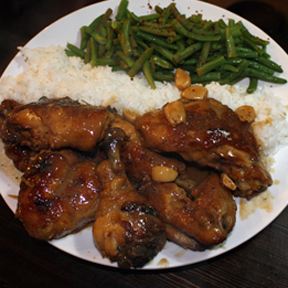
And thirty minutes later things were indeed looking up (ice cubes aside). We sat down to a steaming hot platter of Chicken Adobo. It looked heavenly and smelled even better. It’s a good thing we did our chit-chatting over cocktails, because conversation rapidly died off when we picked up our forks. At some point I did mutter that the recipe reaffirms my belief that anything involving a can of coconut milk is bound to be good. We did give the chicken a quick spin in the broiler while the marinade reduced – which I highly recommend. It caramelized and crisped up the chicken just perfectly. The sauce meanwhile, was creamy, slightly tangy, and loaded with flavor. And the tender, coconut milk simmered garlic cloves were outta this world.

I only have one piece of advice to offer on this bitterly cold Wednesday afternoon. Take out a chicken.

Chicken Adobo
(Adapted from the Purple Yam’s Memories of Philippine Kitchens)

Marinade:
2 cups coconut vinegar
(or rice vinegar, but I would add an extra 1/4 cup, as it is less tangy than coconut vinegar)
2 cups coconut milk
1/3 cup soy sauce
20 garlic cloves, peeled (the more the merrier – you won’t regret it)
4 bay leaves
5 whole birdseye chiles (the cutest little chiles I’ve ever laid eyes on)
2 teaspoons freshly ground black pepper

One (5-6 pound) whole chicken, quartered, and cut into pieces

Combine all of the marinade ingredients – ideally in a stainless or enamel pot with a lid that is large enough to hold the chicken pieces.. Add the chicken pieces and turn to coat in the marinade. Refrigerate for at least 2 hours, or overnight. If the pieces are not completely submersed, flip them once or twice throughout the day.

Heat the chicken and the marinade over high heat. Bring to a boil, then reduce the heat and simmer, stirring occasionally to make sure the chicken is covered in the marinade, until the chicken is cooked through and tender, 20 to 25 minutes.

Transfer the chicken pieces to a broiler pan and broil for about 4-5 minutes. Flip the pieces, spoon a little marinade over them and return to the broiler for another few minutes, While the chicken is broiling, raise the heat under the marinade pan to medium-high, and reduce the sauce until it is the consistency of heavy cream, about 10 minutes. Remove the bay leaves and chiles. Return the now lightly browned chicken to the sauce and cook until just warmed through.

noodle wonder

I know I said I have the southern cooking bug, and I do. I even made a trip to Sixth Street Market this week (a gem of a butcher shop that northern Wisconsin is lucky to have) and got some gorgeous shrimp so I could try my hand at Shrimp and Grits. But then, I got seriously sidetracked. I shamelessly used my southern bound shrimp for a dish I can never resist – Pad Thai.

Often thought of as one of Thailand’s national meals, Pad Thai is a relatively simple noodle dish that has the perfect blend of sweet, sour, savory, slight saltiness, and varying degrees of spiciness. It’s my go to order when I find myself in an Thai restaurant. It can vary widely from chef to chef, and while I’ve had some that I like better than others, I’ve yet to dive into a bowl of Pad Thai that I haven’t thoroughly enjoyed. It’s hard to screw up stir fried noodles.

Many years ago, my dad gave me a slim little book called Seven Wonders: Everyday Things for a Healthier Planet. After an honest introduction that leaves you feeling pretty much disgusted to be a part of the over indulgent American society, author John Ryan goes on to list seven forward thinking tools to help us reduce our ecological wear and tear on the planet. Unlike most American consumption habits, Ryan’s theory is that these seven items can be used by everyone on Earth without overtaxing our planet’s resources. Ryan proposes that the world as whole should make better use of the following items: the bicycle, the clothesline, the condom, the ceiling fan, the public library, the ladybug, and – of all things – Pad Thai.

Ryan reasons that Pad Thai is a sustainable wonder because, like a lot of Asian food, it consists mainly of rice noodles and vegetables – which is friendlier on the planet and our bodies than the typical meat based American meal. In general he encourages us to eat more plant and grain based meals and less meat (particularly grain-fed meat). He cites plenty of other other ethnic cuisines that environmentally beat out the majority of American fare – Italian based pasta dishes, South America’s heavy use of corn, quinoa, and other grains, and Asian inspired rice meals. But I think his decision to highlight Pad Thai as a leading example of sustainability is a splendid one. It’s hard to find a more flavorful dish.

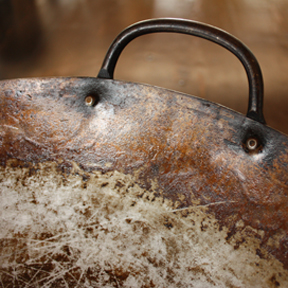
I’ve tried handfuls of Pad Thai recipes over the years – even one from my favorite, but now sadly defunct, Thai restaurant in Saint Paul (White Lily). But I keep coming back to a recipe that I clipped years ago from the back of a package of rice noodles as my home base. (In my book, packaging recipes are a valuable source that should never be overlooked!) As if saving the planet isn’t enough, the other  brilliant aspect of Pad Thai is that it’s quick. I can have it on the table, chopsticks at the ready in under a half hour. Whats more, I get to use my hand hammered wok – one of my favorite pieces of cookware.

What I put into my Pad Thai tends to vary depending on what I have on hand. Rice noodles, eggs, bean sprouts, and the sauce are pretty much the only constants. I almost always use tofu and in the summer I am prone to toss in a big handful of broccoli or cabbage. I rarely use other meat or shrimp, but once I got my grits designated shrimp home, I couldn’t resist making an extra special Pad Thai. Luckily, I can rest easy knowing that when I do get around to those Shrimp and Grits, I’ll be eating another earth-friendly, grain-based meal (shrimps aside of course).


Pad Thai
Honey-roasted chili peanuts
I generally start by throwing about 1/2 cup of raw peanuts into a hot, peanut-oiled wok with a little garlic, salt, and dried chili pepper tossed in. I stir fry these over medium-low heat until they are toasty and fragrant. Then I drizzle a little honey over them and remove them to a plate to get cool and crunchy. Raw or plain roasted peanuts will do in a pinch, but I think it’s worth the extra effort in the end.

Noodles
Cook 8-10 ounces rice noodles according to the package directions, drain and rinse with cool water. Keep these handy next to your wok.

While the noodles cook, mix together the sauce in a small bowl or measuring cup.

Sauce
1/4 cup rice vinegar
2 tablespoons Thai fish sauce
2 tablespoons hot chili sauce (I’m partial to sriracha)
2 tablespoons liquid honey
2 teaspoons tamarind paste (a nice addition, but not completely necessary)

Everything else (vary as desired)
I like to get everything chopped and at the ready before I heat up the wok.

2-3 tablespoons of minced garlic
3 scallions, sliced
12 medium shrimp, peeled and deveined
4 ounces of tofu* (or cooked chicken, pork, etc) diced or shredded
Handful of chopped broccoli, cauliflower, cabbage etc (optional)
2 eggs, lightly beaten in small dish
1 tablespoon pickled radish, thinly sliced (optional, but really tasty)
2 cups bean sprouts
1 lime, cut into wedges
Roasted peanuts
Red peper chili flakes

Heat wok (or large skillet) over medium heat and coat generously with 1 or 2 tablespoons of peanut oil. Add the minced garlic and saute briefly. After a few minutes, add in the egg and place the shrimps around them. Stir continuously until the eggs start to firm up. Add in the scallions and  (if using) the broccoli. Stir fry 3 to 4 more minutes until the shrimp are pink. Toss in the tofu and radishes and stir fry a few times to mix. Add in the rinsed noodles and pour the sauce over the noodles. Stir fry and mix until most of the sauce is absorbed, about 3 – 5 minutes. Remove from heat and toss in the bean sprouts and most of the roasted peanuts. Garnish with lime wedges, red pepper flakes, and remaining peanuts.

* A note on the tofu: I usually cube it and toss it in a baking dish with a little soy sauce, garlic, olive oil and fresh ginger. Then I let it marinate for a while, or ideally bake it in a 300º F oven for a bit to let the goodness soak in. If nothing else, splash a little soy sauce on your tofu before you add it to the wok.

whole hog

My mom called a few weeks ago on a cold, grey January morning. She had frequent flyer miles to burn. Did I want to go with her to Charleston, SC for a few days to visit friends? Let’s see…free flight, free place to stay, fresh seafood, mile high biscuits, creamy grits, humid salt water air, temperatures well above freezing, and hanging out with my mom for 4 days? Uh, yeah. Sign me up.
And so it was that I escaped this winter’s coldest weekend yet. We touched down last Saturday evening to meet a balmy 51º F. Cold by most South Carolinian’s standards, but a welcome reprieve for us northerners. After a glass of wine and a taste of homemade pimento cheese (a southern comfort food specialty) our host sent us to bed with a stack of maps, magazines, and books about historic Charleston. “We can do whatever you like,” she said. “The only thing planned is Sunday brunch at Husk.” My eyes lit up. Husk is Charleston’s new localvore restaurant. I had googled it before I left. “If it doesn’t come from the South, it’s not coming through the door,” says chef Sean Brock, who has even bannished olive oil from the kitchen. As he explains, the resulting cuisine “is not about rediscovering Southern cooking, but exploring the reality of Southern food.” Their menu, which changes daily based on what the market has to offer, had me drooling on my keyboard. Dark Days eating never looked so promising.

Sunday morning found us oceanside at Isle of Palms beach. If it weren’t for our brunch reservation my mom and crew would have a heck of a time trying to pry me away from the waves, the crisp salt water breeze and the blazing sun. I couldn’t soak it up fast enough. Lucky for them, brunch was calling, and I was hungry.

Housed in a historic Charleston mansion, the interior and decor at Husk was everything I expected – spacious, high ceilings, wood floors, tall double-hung windows, uncramped tables, warm, and inviting. The entryway boasts an oversized chalkboard that lists dozens of ingredients and their sources. We were seated upstairs overlooking the type of grand southern style balcony that I wistfully long to somehow tack onto our little northwoods cabin. I kicked things off with a Bloody Mary. Fully expecting a proper southern garnish of shrimp and okra, I was completely charmed when my drink arrived cloaked with a dainty slice of country style ham draped elegantly over the rim and a sole dilly bean afloat. It was one of the tastiest bloodies I’ve ever had. Did I detect a hint of creole spice?
It’s a good thing I had a drink to nurse while perusing the menu. This was going to take some serious thought. Wood fired clams with sausage and sweet pepper cream? Duck leg confit over farro and greens with red eye gravy? Or maybe the cornmeal dusted catfish with field peas and bacon jam. In the end, I went whole hog (literally) and ordered the Honey-Benne Lacquered Pork Belly served over Johnny cakes with a poached egg and spicy hollandaise. Memories of the morning beach romp faded and were flawlessly replaced with a taste bud frenzy. I was so full after my meal that I barely had room for a bite of my mom’s dessert. Which is too bad. The Black Bottom Pie was was served up in a small Mason jar with layers of chocolate mousse, bourbon vanilla cream, and crumbled molasses shortbread cookies. In a pinch, the dessert could have fallen back on its cuteness alone.
Our sharp hosts quickly picked up on my love of food and kept us well satiated for the duration of our visit. Crab cakes, pulled pork sandwiches, and creole style beef over parmesan grits were highlights. They also caught onto my fascination with visiting local grocery stores and markets. My mom and I wandered the aisles, oohing and ahing over southern staples. White Lilly flour, collard plants the size of small trees, fresh seafood, Carolina gold rice, sorghum syrup, and gorgeous pecans. I couldn’t resist. I packed my carry-on full of black eyed peas, fresh ground grits, Gullah spice (the core of traditional African-American low country cuisine), and benne wafers (a Charleston original – thin sesame seed based cookies, said to bring good luck). Some good old-fasioned soul food is in our future: Hoppin’ John, Charleston Red Rice, Shrimp and Grits, and maybe even a Buttermilk Pie.
Needless to say, the rest of our local Dark Days meals for the last half of January sort of paled in comparison to my southern Honey-Benne Lacquered Pork Belly. There were juicy burgers with local beef and crunchy oven fries. My husband Mark made a batch of cat-approved burritos stuffed with broccoli from the freezer, potatoes from cold storage, and local feta and eggs, smothered in homemade tomatillo salsa. And to kick off my southern cookin’ escapades, last night’s menu featured slow baked local ribs in our home canned apple cider and barbecue sauce with a side of buttery mashed potatoes and tangy slaw of garden cabbage, carrots, celeriac, and shallots.
I’m more inspired than ever to wait out the dark days in the kitchen!

kale crunch

Time for another Dark Days Challenge local foods report. Our last two meals were classics – grilled chicken and grilled pork chops. We do a fair amount of grilling in the winter. It’s oddly satisfying to stand on the snowy deck, fully bundled up, dreaming about about summer barbecues and cold drinks. And in fact I was in so much of summer mood that I couldn’t help myself. I cheated on local night. Once the thought of my all-time favorite summer bbq chicken recipe entered my head, I couldn’t shake it. I had to have it.

The bird itself came from just down the road. But the brine I soaked it in was anything but local. I e-mailed Mark at work and asked him to pick up the interloper on his way home – a liter of coke. Mixed with a half cup of kosher salt it makes a splendid bath for the butterflied and pierced chicken to soak in. After a quick towel off, I slather the bird with a paste of honey, olive oil, garlic, salt pepper, paprika, and dry mustard. Then onto the grill it goes, where it is promptly flattened beneath a few fire bricks. And it never fails to come off the grill crispy, salty, sweet, and juicy. For local night I made a honey mustard dipping sauce. It is also quite tasty with a bourbon based sauce, but I thought one non-local sin was enough for the night. We rounded out the meal with a baked butternut squash from the garden and roasted kale also from the garden, via the freezer.

Kale Crunch
I have many favorite ways to prepare kale, but my latest fixation is to simply coarsely chop it, spread it out on a heavy baking sheet, splash a little olive oil, salt, and pepper on it and roast it in a 250º oven for about a half hour until it is crispy. The result is something so crunchy and salty and earthy tasting that I have to seriously hold myself back from eating the entire tray of it in under 5 minutes. Kale? What kale? If it does stick around long enough to make it onto a serving platter, I generally give it a sprinkling of red pepper flakes for a little zing. It’s also quite magnificent to hold the leaves up to the light before popping them in your mouth – a visual and a taste sensation.

Meal seven of the challenge is somewhat of a winter standby for us – and one of our favorites. We always get a few extra packages of chops with our pork share, specifically with this recipe in mind. The original rendition came from a neighbor and friend of ours, Tony Thier. His is a skillet based version, but we generally prefer to cook our meat outdoors if we can. So we salt and pepper the chops and throw them on the grill. But instead of taking them off onto a serving plate, we put them in a pre-warmed heavy skillet and loosely tent them for a bit so some of the juices run of into the pan. The chops get moved to a warm plate and the pan juices are gently heated with a few generous spoonfuls of homemade sauerkraut. And to really knock it out of the park we stir in enough plain yogurt to make a creamy, tangy slurry to spoon back over the chops. Add in some warm buttered mashed potatoes and garlicly roasted brussel spouts and suddenly a 7 degree winter night doesn’t seem so bad.

Here’s to more darks days ahead!

save your tarts

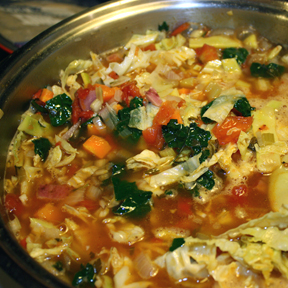
I have a confession to make. In all the time I have spent in the kitchen, I have never made minestrone soup. Ever. I mean doesn’t it seem like that should be some sort of prerequisite? Truth be told, I have only eaten minestrone soup a handful of times. I don’t know, its just never really jumped out at me. But then, a few weeks ago, I perusing one of my favorite coffee table books – M.F.K. Fisher’s The Art of Eating – and I came across something that intrigued me. I should note that I find a lot of intriguing bits in this hefty volume. This is a book that pretty much has a permanent home on or around the couch, as it is the only way I will ever get through all 749 pages of it. I love picking it up for a quick escape – Fisher’s style, wry sense of humor, and culinary opinions are such a refreshing treat. And it’s the type of book you can open to just about any page and start reading. Which is what I did the other week. And here is what Mary Frances has to say about minestrone.

“Probably the most satisfying soup in the world for people who are hungry, as well as for those who are tired or worried or cross or in debt or in a moderate amount of pain or in love or in robust health or in any kind of business huggermuggery, is minestrone.”

Clearly, I have been missing out on something. Why have I not made this soup? So I tagged it with one of my favorite little sticky notes. And then I went to go look up “huggermuggery” in the dictionary: 1. disorderly confusion; muddle 2. secrecy, concealment. I’ve yet to throw it out conversationally, but I’m working on it.

Back to the soup. M.F.K. has plenty to say on the subject and debates the merits of a water base versus bean broth, which some actually say is not a minestrone at all, but a minestra – who knew? Bacon, or ham, or no meat at all, pasta, no pasta? I have so much catching up to do in world of minestrone! Fisher goes on to quote Mrs. Mazza, who wrote “a plate of this pottage, topped with grated Romano, served with crisp garlicked sour-dough bread, a salad and a glass of wine, and I have dined.” And although Fischer evidentially had her disagreements with Mrs. Mazza regarding the preparation, she does give her this much: “For the rest of the meal, Mrs. Mazza and I are one. There is no point doing much else, the night you make minestrone, because nobody will eat anything else anyway. Save your tarts for a leaner hungrier night.” That’s it. I was sold. Minestrone was in my future.

So after a particularly arduous day this past week, I knew the time had come. I rounded up onions, potatoes, celery, cabbage, carrots, garlic, greens, and a bit of bacon. Then I poured a glass of wine, put on some Buddy Guy, and got to work. I pretty much followed M.F.K.’s recipe – which is always a hoot, in and of itself. I adapted it here and there, but what follows is her original recipe. It’s a treasure. And yes, I felt remarkably better after eating a bowl of warm minestrone. It fed us for several meals, and the last of it just went into the freezer for the next time I get involved in a little huggermuggery.

A Basic Minestrone
from M.F.K. Fisher’s How to Cook a Wolf

1/2 pound bacon or salt pork
1 small onion chopped
1 stalk chopped celery
1 handful chopped parsley
2 cups tomatoes, peeled
1 teaspoon oregano
1 teaspoon oregano

Soften the onion in the heated meat-fat, add celery, parsley and herbs, and stir for 10 minutes to make a glaze, adding a little water if necessary. Add the tomato, stirring constantly and taking care not to burn. Stir in 2 or 3 quarts of water. Add a little mace if you like it. (At which point she quips…This soup is fun, because it’s so malleable!)

Put at least the first five of the following vegetables through the fine grinder of the vegetable chopper. OR cut them not too finely, let them simmer until tender, and then mash well with a potato masher before you add any pasta. I like this method better than the one I gave before. (Amusing that she still gives the vegetable chopper method then!)

2 large onions
1 potato, skin and all
1/2 small cabbage (Savoy preferably)
3 carrots
6 stalks celery
some spinach…say a big handful
some green beans…the same
You see what I mean?

Bring the whole thing slowly to a boil, and then let simmer until the vegetables are very tender. Add some pasta twenty minutes before serving if you like (not until the next day if you plan to use the minestrone more than once). Churn the soup ferociously, and serve over thin toasted bread or not, but always with a good ample bowl of grated dry cheese to sprinkle upon each serving, as the pleased human who eats it may desire.

*Note: I was most befuddled by the instructions to “churn the soup ferociously.” Maybe I made some huge minestrone faux pas, but I opted to give it a few pulses with the immersion blender. I also set the bottle of red wine vinegar on the table with the parmesan cheese. Both were magnificent additions.

local trifecta

When I think back on the last few weeks of eating, there are three meals that stand out. Three little respites amidst all of the holiday parties, gatherings, and feasts. And to think I was actually a bit skeptical as to how I would fit these particular meals into our hectic December schedule. I’m so glad I managed. These noteworthy delights were our weekly, Dark Days Challenge, 50-mile radius, local meals.

And in fact, the first of these three meals – Curried Root Vegetable Stew with Dumplings – wasn’t only a standout in recent memory, but one I’d claim as a top runner for all of 2010. It will certainly make the rounds at our table again. The recipe is from Molly O’Neill via the Essential New York Times Cookbook and originally appeared in the Times in 1994. It has that perfect blend of sweet and savory, light and hearty. My one conundrum was making the dumplings using my local flour, which is 100% whole wheat. They worked, but they were definitely on the sturdy side and not the most attractive dumpling I’ve ever had bobbing in my stew. It made me ponder how the cooks of my great-grandmother’s era managed to pull off lighter flour based goods. Maybe they didn’t. Or maybe they hand separated the wheat bran and germ to yield a lighter flour. I wasn’t that ambitious.

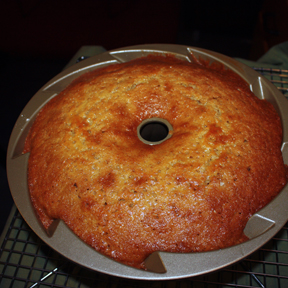
I also baked a rustic and flavor filled Olive Oil and Apple Cider Cake from the same cookbook to accompany the stew. It was a welcome departure from the overly sweet treats that December typically offers up. Again, I used all whole wheat flour, but in this particular cake, I think it worked well. The whole wheat added structure and a nuttiness that I appreciated. I also substituted honey for the white sugar the recipe called for.

Our fourth meal of the Challenge celebrated the much anticipated arrival of our local bacon. We get a pork share each winter from Hermit Creek Farm in Highbridge, WI. In addition to the most incredible tasting bacon I have ever had, the share includes a wonderful assortment of chops, roasts, sausages, fresh ham, and pork steaks. The thick, meaty bacon arrives a few weeks after everything else to allow for a good, slow cure in the smoker. So the afternoon we picked up our bacon, dinner was a no brainer – bacon sandwiches. Quick, easy, and hard to beat. They featured dried tomatoes from the summer garden, a homemade garlic aioli, and spicy micro greens on local cracked wheat bread.

Rounding out the trifecta was our last meal of the year. We had several tentative options for New Year’s Eve, but in the end we chose what I would almost always pick – we stayed in. Which felt like an especially fine choice once we heard the sound of freezing sleet beating against the windows. Earlier in the day I had ditched my fancy menu ideas in search of something more simple and grounded. Going local felt like the right thing to do. I settled on a crisp, clean, subtly sweet, parsnip soup to ring in the New Year. And it was the perfect choice. I based the soup on a recipe I bookmarked ages ago from the passionate cook’s blog. I dressed it up for the holiday with a bit of milk and cream and I topped it off with a hearty squeeze of fresh lemon juice (my non-local vice) and slivered roasted chestnuts (local via my mom in Lake City, MN).

We got the night started with some local chev topped with friend Linda’s homemade plum-delicious chutney and we closed out just past midnight with a dish of honey-nutmeg ice cream that I had made earlier in the day. Oh, and I guess I should mention the very fine bottle of bubbly that made its way to our table all the way from France. Not the least bit local, but we appreciated it for what it was – a true and rare treat.

Creamy Parsnip Soup

3 cups peeled and chopped parsnips (about 1/2 inch dice)
2 cloves crushed garlic
2 tablespoons butter
2 – 3 teaspoons honey
2 cups chicken or vegetable stock
2 cups milk or cream (or a combination)

Toppings:
fresh squeezed lemon
roasted, slivered chestnuts

Melt the butter in a heavy soup pan, add the garlic and parsnips and cook for about 10 minutes until they both start turning a nice caramely brown. Add the honey and the stock, and continue to cook for about another 10 minutes or until the parsnips are tender. Purée the soup (either using a blender or immersion blender) and add the milk and/or cream. Heat through gently and taste for sweetness, adding a touch more honey if necessary (the lemon balances the sweetness perfectly). Season to taste with salt and pepper.

To roast chestnuts:
Score an “x” in each nut with a sharp knife. Roast the nuts on a baking sheet in a 350º F oven for about 30 – 45 minutes. Nuts should be fragrant, soft, and a bit chewy. Let cool slightly and peel away the outer shell. Slice thin.

Top the soup with a healthy squeeze of lemon juice and a scattering of chestnuts. Serves 4 as a first course, 2-3 as a main.

The nitty-gritty…

Dark Days m.3
Curried Root Vegetable Stew
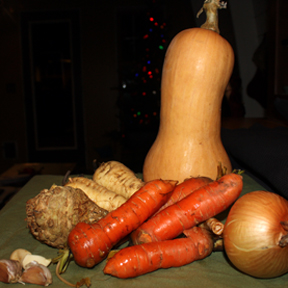
Onions, garlic, carrots, parsnips, butternut squash – a substitute for sweet potatoes (our garden), celery root from Hermit Creek Farm (29 miles), chicken stock (homemade with garden vegetables and a local chicken), butter – homemade with Tetzner’s Dairy cream (15 miles), whole wheat flour from Maple Hill Farm (14 miles), curry powder (spices from a far, but handmade at our annual local curry making party), salt and pepper.

Dumplings
Whole wheat flour from Maple Hill Farm (14 miles), milk from Tetzner’s Dairy (15 miles) baking powder, salt, and mace.

Olive Oil and Apple Cider Cake
Apples from Bayfield Apple Company (4 miles), apple cider (pressed an preserved from our apple trees), whole wheat flour from Maple Hill Farm (14 miles), honey (my bees), eggs from a farm near Delta, WI (50 miles), olive oil, baking powder, and salt.

Dark Days m.4
Bacon Sandwiches
Bacon from Hermit Creek Farm (29 miles), re-hydrated dried tomatoes (our garden) spicy micro greens from Paradise Meadows (12 miles), garlic aioli (homemade from our garlic, a local egg, and olive oil), whole wheat bread made using 100% Spring Hill Farm wheat from Coco’s Bakery (12 miles)

Dark Days m.5
Chev Crisps with Plum Chutney
Herbed goat cheese from South Shore Chev (30 miles), plum chutney (homemade by my friend Linda with her plums), lavash flat bread from Coco’s Bakery – not really local ingredients, but a local business nonetheless. Homemade crackers are my next endeavor! (12 miles)

Creamy Parsnip Soup
Parsnips and garlic (our garden), butter – homemade with cream from Tetzner’s Dairy (15 miles), chicken stock (homemade with garden vegetables and a local chicken), milk and cream from Tetzner’s (15 miles)

Honey-Nutmeg Ice Cream
Milk and cream from Tetzner’s (15 miles), honey (my bees), salt and a dash of nutmeg

Curried Root Vegetable Stew with Dumplings
Adapted from The Essential New York Times Cookbook

2 teaspoons butter
1 onion, chopped
3 or more cloves garlic, minced
1 1/2 teaspoons curry powder
4 cups vegetable broth
2 medium carrots, chunked
2 large parsnips, peeled and chunked
1 small celeriac root, trimmed and chunked
1 1/2 – 2 cups winter squash, peeled and chunked
3 tablespoons flour
2 teaspoons salt
ground pepper

Melt the butter in large stew pot. Add onions, cook for a few minutes. Stir in garlic and curry powder and cook for 30 seconds. Stir in broth, carrots, parsnips, and squash and bring to a boil, then reduce to a simmer, cover, and cook for 15 minutes. Stir in the celery root and cook about 10 more minutes.

While the stew simmers, prepare the dumplings. Combine 1 cup flour, 1 1/2 teaspoons baking powder, 3/4 teaspoons salt, and 1/2 teaspoon ground mace in a mixing bowl. Work in 2 tablespoons cold butter until a coarse meal forms. Mix in 1/4 cup dried currants. Stir in 6 tablespoons milk and mix until everything is just combined. On a lightly floured surface, shape the dumplings into 1-inch balls.

Back to the stew…remove 1/4 cup of the simmering stew liquid and mix in 3 tablespoons flour to make a smooth paste, then stir back into the stew. Add salt and pepper to taste. Place the dumplings in the simmering strew, cover, and cook for 15 minutes.

week 52

Finally. My favorite week of the year has arrived. I go out of my way to arrange my schedule so that I can more or less take the last week of each year off. It seems fair enough, doesn’t it? After 51 weeks of running around, working, playing, and juggling the affairs of day to day life, I think we all deserve a week of rest. I can’t recommend it enough.

This is the week of slow mornings with coffee and that new novel that was under the tree. This is the week I can even get away with slipping a splash of Bailey’s into my last cup of joe. It’s the week we give our dining room table over to building our annual 1000 piece jigsaw puzzle. This is the week I make a bottomless pot of stew to see us through the last days of the year. And it’s the week we set out on late afternoon skis, often treating ourselves to a cold brew afterwards.

Which is not to say that this week is altogether hedonistic. I also try and take care of those random things that I don’t seem to get to on a regular basis. I clean out my work files – paper and electronic – to make a clean slate for the year ahead. I get more satisfaction than I probably should from vacuuming in all those strange little spaces that magically collect dust throughout the year. I go through my digital pictures and order a photo book that features the best of our year’s adventures. I try and tie up as many loose ends as I can so the new year ahead gets its own fair shake.

This is also the week I make time to truly contemplate the past 51 weeks of  living. My husband Mark and I have a tradition of sitting down together with our main house calendar to reminisce over the last 12 months. In addition to writing down all the meetings, appointments, and engagements we have, we also make a point to jot down the funny, sad, memorable, and even the mundane moments that make up our days. It makes for an enjoyable way to reflect on the year and it also helps me to think about the year that lies ahead and what I maybe want to do differently – or keep the same.

If you’re thinking this sounds like a pretty good week, wait. It gets better. The crème de la crème of week 52 is my mother’s toffee. I am not a huge sweet eater, but you’d never know it if you were to catch me around a tin of her toffee. I can’t stop. No restraint. None. And so this is the week when I don’t even try. I eat it whenever the mood strikes. Which means I generally have a piece with my morning coffee. And another when I sit down to puzzle for a bit. Afternoon tea at my desk wouldn’t be proper without it. I give myself permission to work my way through the entire tin of it. It’s everything toffee should be – crunchy, buttery and just a little salty. And it’s a cinch to make. With a good heavy pan and a candy thermometer, you can turn out a batch in about 20 minutes. I’d like to say that this toffee should not just be limited to the holidays, but due to my addiction, I generally do. It’s that good.

My mom has been making this toffee to give as holiday gifts for nearly 30 years. This recipe is based on a recipe that my mom got from a friend back in the 80’s. The original recipe calls for almonds, but I am especially fond of it with toasted hazelnuts (filberts). Try either, but do yourself and your loved ones a favor, and make a batch to close out 2010.

English Butter Toffee

1 cup raw filberts or almonds
1 cup salted butter
1 cup granulated sugar
1/3 cup brown sugar
2 tablespoons water

Pre-measure:
1/2 tsp. soda
1 teaspoon vanilla (or a splash of dark rum – especially if you are going the hazelnut route)

6 ounces bitter-sweet (60% cocoa) or semi-sweet chocolate bits or bar
coarse sea salt

Lightly toast the nuts on a heavy baking sheet in a 400º F oven for about 10 minutes. Measure out the rest of the ingredients while the nuts are toasting. When the nuts smell fragrant, remove them from sheet and coarsely chop. Line the same baking sheet with a piece of parchment paper and spread half of the nuts over the tray. When it comes time to spread the toffee, it helps to have the cookie sheet a little warm. I generally pop the nut laden sheet back into the oven – which is off, but still warm from toasting the nuts – while the toffee cooks.

Combine the butter, sugars, and water in a heavy sauce pan over medium high heat and mix well. Bring to a boil, stirring constantly. Attach a candy thermometer to the pan and continue cooking and stirring until the mixture reaches 300º F (hard-crack stage). In the last few minutes of cooking, the mixture will turn a lovely dark caramel shade. Remove from heat and working quickly, stir in the soda and the vanilla. The mixture will froth up slightly as you add in the soda and vanilla.

Pour the mixture carefully over the slightly warmed tray of nuts. Spread the toffee around evenly with a heat-proof rubber spatula. Resist every temptation you have to prod, tug, or even it out it with your fingers – it will be incredibly hot and not very much fun (I speak from experience).

Let cool about 10 minutes. Sprinkle chocolate bits or shaved bar chocolate over toffee. Using a butter knife or spatula, spread out the chocolate evenly. Sprinkle the remaining nuts over chocolate and press in lightly. Top with a pinch of coarse sea salt. Cool. Break into pieces. Store in an airtight container. (Makes about 1 1/2 pounds)


instapig

No Instagram images were found.