Archive for the 'garlic patch' Category


the great e-scape (project picnic.4)

I have good news people. It’s twirly-dip season. More commonly known as garlic scape season. I adopted the twirly-dip nickname many years ago, long before I knew my garlic plant anatomy. I now know that the “scape” is really a flowering seed head. It’s the garlic’s natural way of reproducing. Each flowering pod contains a handful of “bulbils,” a fancy name for itty-bitty garlic cloves. If left to its own devices, the garlic scape matures and waits for its bulbils to be scatterd. Assuming all goes well, each bulbil matures into a small head of garlic the following year. And yes, humans can do the same thing and intentionally plant the bulbils, but it takes a good three years of planting and replanting the resulting cloves of garlic to get a decent size head. Still, that’s pretty cool.
Now, back to the botany lesson. About a month or so before the underground bulb fully matures, a garlic plant heeds the call to send up a flowering scape. It starts as a little sprout emerging from the top part of the plant. Over the course of a week or so, it begins to lengthen and curl around into a spiral. Hence the “twirly-dip” terminology. It really is a thing of beauty. Left intact, the curlycue will eventually straighten itself back out and shoot skyward. The garlic plant puts energy into developing its seed head – at the expense of the bulb below ground. Which means if large, plump heads of garlic is your goal (and you’re willing to do the work of the bulbil), then trimming the scapes off is in your best intrest. To me this is a win-win situation. My garlic heads grow larger, and I’m left with a culinary treat that is especially fun to cook with. Which is pretty much how I spent my entire holiday weekend. You have been warned. Prepare to be inundated with garlic scape recipes.
But first, let’s cover a few garlic scape practicalities:
1. If you’re harvesting scapes from your own garden, it is best to pick them when they are in full curl, between 1/2 and 3/4 turn (like in the photo above). If you pick them too young, it potentially shocks the plant and may cause secondary sprouting or formation of side cloves off the main bulb. If you wait until they start straightening out, the stalks will be tough and unappetizing. Trim or snap the scapes off just above the top leaf of the plant.
2. Scapes store well – up to 3 weeks in the crisper drawer. So if you come across a source, stock up! For those of you with your own garlic patch, consider yourself lucky. Otherwise, scapes are becoming more and more popular and can often be found this time of year at farmer’s markets and natural food stores.
3. When cooking with scapes, it is best to trim the actual seed pod off and use the section of stalk below it. In other words, you want to cook with the portion of the scape that emerges from the top of the garlic plant to where the seed pod starts to bulge out. The top part of the scape is more grass like and stringy. There is no harm in eating it, but you might find yourself doing a considerable amount of chewing. Plus, there is a much better use for them. Slow simmered with water, a splash of white wine, a few greens, and a handful of fresh herbs, they make a lovely garlic soup stock. I keep a bag going in the fridge and when scape season comes to an end I make a big pot of stock for the freezer. Full recipe forthcoming…
4. Left raw, scapes are tender and garlicky, but are less pungent than an actual clove of garlic. Finely chopped, they make a lovely addition to green salads, egg salad, tuna salad, any salad really. Think of them like a scallion. When cooked, the scapes become creamy and nutty, with just a slight hint of garlic flavor. Which makes them perfect for stir-frys, fritattas, scrambled eggs, and pasta dishes. It’s important not to overcook them though, as they tend to get tough.
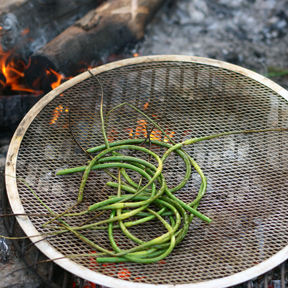
My first scape harvest of the season almost always goes straight over hot coals. This is my favorite way to prepare them. Toss them with a little olive oil, fresh pepper and sea salt and lay them on the grill or fire pit. I use a finer mesh screen over the grate to save anyone from an untimely death. It takes about 8 – 10 minutes for them to soften up and get a little char. Turn them once or twice and when they look tender, transfer to a platter, give them a squeeze of lemon juice and a sprinkle of chili pepper flakes. If you’re anything like me, they will disappear faster than one would think possible. (You’ll see in the photo that I have grilled the whole scape, even though I just got through telling you to cut the top part off. I almost always follow my own advice, but still there is no denying how artistic the entire scape looks – sometimes it’s fun just to cook the whole package).
Once I get the craving for grilled scapes out of my system, I move onto other things. This year I decided to start with garlic scape pesto. Mixed with some chunky penne pasta, it was the star of our June picnic. Actually, I take that back. The real star of the picnic was a thunderstorm, complete with green skies, quarter size hail, and straight line winds. Mark and I had decided to take an “extended picnic” and turn it into an overnight camping excursion. We packed our picnic tin, loaded the kayaks on the roof, threw in a blanket and some books, and headed for Lake Superior’s Bark Bay. We managed to score a tent camping site on the Herbster beach and geared up for a much needed day of play.
Well fortified with pasta bathed in twirly-dip pesto, we ventured out for a late afternoon paddle on the lake. Sunny skies, slight breeze, calm waters. All good. Back on land we had just settled in with gin and tonics (car camping has its merits) when we noticed some ominous clouds gathering off to the southwest. Sure enough a few minutes later the county sheriff was easing his way though the camp ground alerting campers of a severe weather system on it’s way from Superior. We packed things up as best we could and headed for the tent, fully expecting to resume our evening after the storm blew through.
But there was the problem. The storm didn’t exactly “blow through.” The traveling warm air mass hit the cool wall of Lake Superior and stopped – for a good long while. We laid in the tent, watching the sky outside do amazing things, occasionally exchanging a silent worried look, and listening to the sound of hail ricocheting off of our poor little picnic tin. I didn’t have high hopes.
Hours later we emerged from our abode (which was still standing and still mostly dry inside) to assess the situation. It was dark now and still raining, but the brunt of the storm had finally passed. Lake Superior was positively roaring. We learned that the majority of tenters had been evacuated to the local high school for the night. We also heard rumors of another cell coming through at 4:30 a.m. Hmmm. This news prompted us to do something we have never done before while camping. We decided to plan our escape. Mark went for the car while I packed up the sleeping gear. We rolled up the tent into a sopping heap, threw it in the back of the car and drove the 30 minutes back home. I was stunned to find the picnic tote still dry inside. We had a late night snack and retreated to the quietness of our bedroom.
We awoke to sunny skies, refreshed and ready to resume. With a thermos of coffee for the road we made the return trip back to our boats and other belongings. As we suspected, the bay was a churning chocolate brown soup and the campground was littered with upside down tents drying out (some considerably more worse for the wear than others). After a hearty breakfast we headed out for a paddle through the Bark Bay Slough – a costal barrier spit and lagoon that feeds into Lake Superior. Water lilies were blooming, dragon and butterflies were out joy riding, and we enjoyed several fine turtle sightings as we paddled our way back towards land. What a way to ring in the season’s first twirly-dips!

I should warn you that this pesto is indeed garlicky. To me though, it strong and flavorful without an overbearing garlic heat. I love to eat it straight on salty pita crackers or bread. It also works well to cut it with créme fraîche, yogurt, and/or sour cream and use it as a vegetable dip or pasta sauce. And, like most pestos, it freezes well for an excellent winter treat – or pull it out even sooner and pair it with fresh summer tomatoes. I adapted this recipe from one I found in the Washington Post several years ago. I find it works best to use a food processor to really grind up the scapes and nuts. But if you’ve got determination, you could do it by hand with a mortar and pestle.
Stay tuned. Recipes for pickled dilly scapes, beer-battered scapes (oh-my!), and garlic soup stock are on their way later this week.
Garlic Scape (twirly-dip) Pesto

1/2 cup garlic scapes, chopped, flower portion removed (about 10 scapes)
1/3 cup almonds or walnuts
1 teaspoon lemon zest
squeeze of fresh lemon juice
1/3 – 1/2 cup olive oil (I use more oil if the pesto is going over pasta)
1/2 cup grated Parmesan
large pinch of sea salt

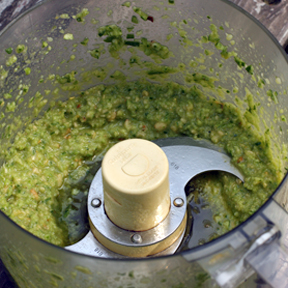
Process the scapes, nuts, lemon zest and juice in a food processor until they are somewhat smooth and the texture is to your liking. Slowly drizzle in the olive oil, pulsing the machine as you go. Use a spatula to scrape down the sides and fold in the Parmesan and salt by hand. Taste and adjust seasoning as needed. Makes about 1 cup.
antsy pants

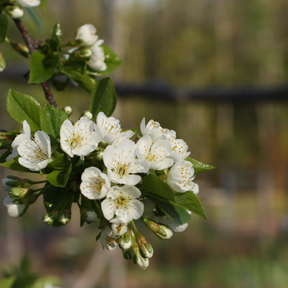
This is the time of year that I tend to get a little squirrelly. The peas and radishes are up, but they’re weeks out from being ready to eat. Same with the first crop of carrots and beets. The tart cherries are in full bloom, but a pie is at least a month off. Basically, the garden at this point is brimming with hope, but not much action. There’s rhubarb, that’s promising. But even as much as I love those tart crisp stalks, theres really only so many places you can take them. Which leaves me pacing the freshly strawed garden paths and twiddling my thumbs.

Inevitably my gaze falls on the showiest thing in the garden – an innocent row of perky garlic. And I wonder out loud, “Should I?” Meaning, dare I indulge myself and recklessly dip into the fall harvest prematurely? When garlic is harvested at this stage it is referred to as green garlic. It looks something like a cross between a scallion and a leek – just a straight slender stalk, without its traditional bulb attached to the end. Herein lies the dilemma. What could potentially become 8-15 individual plump cloves of garlic instead gets scarfed down as one. And that’s it. Party’s over. It feels like such a disgrace, such a rip-off to the garlic plant.

I casually avert my eyes for a moment. Oh the agony! Green garlic is really good. It is everything I crave this time of year. It’s earthy and mild and fresh and garlicky. It puts the lingering heads of our fall stored garlic to shame. But it just feels so wrong. Still, I can’t help myself. I never can. A stalk here to mix in with the pasta. A stalk there for an asparagus frittata. And several stalks to make spinach and green garlic soup. This really feels like going overboard, but it is so worth it. So much so that I now make it a point to plant a small bed each fall of what I know is going to be harvested as green garlic. Somehow it eases my guilt. At least a little. It’s not like I went and got anyone’s hopes up or anything. Those garlics knew their fate right from the get-go.

Any remaining doubt is generally absolved when I take a deep inhale over the resulting steamy bowl of bright green garlicky goodness. I am normally a slow eater. Painfully slow by some people’s standards. But not with this soup. This soup puts my hand into high gear, involuntarily spooning it into my mouth faster than I can keep up. It dribbles down my chin. I don’t care. I lick the bowl clean and then go back for another scoop to do it all over again. It’s so earthy and green, I literally feel my body soaking it up after a winter’s worth of starchy root crops.

On my second bowlful, I generally come up for air long enough to dunk a piece of buttered baguette into my bowl and have a sip of wine. My friend Mary, who knows way more about wine than I do, recently turned me onto an amazing petite sirah, old vine zin and old vine mourverde blend (Phantom) from Boggle. It’s as earthy and as deep as this soup – in a wine sort of way. They are a match made in heaven. And with that, I know I’ll make it. I can put my antsy pants back on the shelf for another year. Summer is nearly here. I can taste it. I just hope the peas and carrots get on with things in a timely manner. For the garlic’s sake.

This recipe is an adaptation from Zuni Café in San Francisco, via one of my favorite food blogs, Orangette. I usually sacrifice at least a baker’s dozen (sometimes more) of garlic plants for the soup. If you don’t have your own garlic plot to contemplate pilfering, (or even if you do, but happen to have more restraint than I do) fear not. This is the time of year you are likely to find green garlic shoots at farmer’s markets and other places that sell local produce. You’ll want to use just the tender white and pale green parts of the plant. Save the tougher green tops for use in a vegetable stock if you’re so inclined. You could also try the soup with regular garlic, but I would use just a few cloves, minced and simmered just a titch longer. It’d still be a lovely way to celebrate that long awaited spring spinach.

Spinach and Green Garlic Soup

2 Tbsp. unsalted butter
1 Tbsp. olive oil
1/2 – 3/4 lb. trimmed green garlic (13 -15 1/4″ thick stalks), thinly sliced
Salt & pepper
4 cups vegetable stock (homemade or boxed)
10 oz. fresh, spring spinach leaves, chopped if the leaves are large
1 Tbsp. yogurt, keifir, or crème fraîche
Fresh lemon

Heat the  butter and olive oil in a soup pot over medium heat. Add the green garlic and a pinch of salt, and cook, stirring frequently, until it is soft and translucent, about 10 minutes. You should notice the pungency of the garlic mellowing as it cooks. Add the stock, bring it to a boil, then turn down the heat to keep a gentle simmer going for about 15 minutes. Add the spinach, and turn off the heat. Stir the spinach in and let it sit covered for just 5 minutes. Puree the soup using an immersion blender (or regular blender).

Stir in 1 Tbsp. of yogurt, keifir, or crème fraîche, another pinch of salt and a grind or two of pepper. Taste, and adjust seasoning as necessary.

Serve warm or hot, with a squeeze of fresh lemon and a few drips of yogurt, keifir, crème fraîche.

Serves 4 (Unless your body is totally thirsty for greenness. Then you could possibly, maybe, eat almost an entire pot all by your very self. I know. I’ve done it.)


gussy up!

It might be time for an intervention. I planted another bed of garlic yesterday. It was a small bed, but just the same, I agreed to be done planting two weeks ago. My lunch is what got me into trouble. A quick meal of fusili tossed with the season’s final tray of roasted tomatoes, parmesan cheese, and a handful of garlic sautéed in butter. But it wasn’t just any garlic. It was a smooth Italian softneck that really shines as the star of simple pasta dishes. And for reasons I’m not at all certain of, I didn’t set much seed aside for my initial planting. Luckily I realized the error of my ways in the nick of time. I went out to the shed after lunch to rummage through our eating stock and found just enough plantable size cloves to put in a few rows. But that was it. No more. To distract myself from any further temptation, I devoted the rest of the afternoon to bringing in the last of the carrots, parsnips, potatoes, and beets.
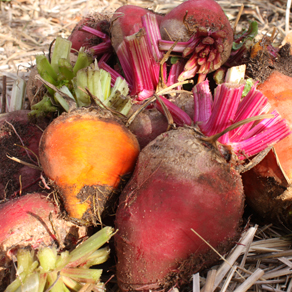
This is the time of year when choosing between which of the root vegetables to prepare is still new and exciting. Young love. I treasure it, because I know the burden I’ll feel come February when I have to hack into yet another winter squash. But when that stage hits, I’ll turn to my garlic to help pull me through. Nothing dresses up baked squash, mashed potatoes, or roasted beets better than some caramelized garlic squeezed over the top. I just put a handful of peeled cloves in a little foil packet with some salt, pepper, and olive oil drizzled over the top and let them roast alongside the chosen accomplice. It seems to make everything more bearable.
Not that I wait around for the doldrums of winter to start roasting garlic, mind you. Fall officially kicks off around here with the first plate of roasted heads. The simplest method is to slowly roast whole heads in a 325º F oven until garlic is soft and aromatic – anywhere from forty five minutes to an hour depending on the garlic. The garlic will effortlessly squeeze out of its papers onto bread, pasta, crackers, baked potatoes and anything else you happen to have at the table. Prep for this is quick and easy – just thumb most of the outer papers off of whole heads, remove any dirt from the root end, and then use a sharp knife to trim the very tops of the bulbs off, leaving the tips of the cloves exposed. Put the heads in an appropriately sized oven proof dish with a lid (foil will do in a pinch), drizzle some good olive oil over the heads and sprinkle with coarse salt and pepper. It’s hard to go wrong.
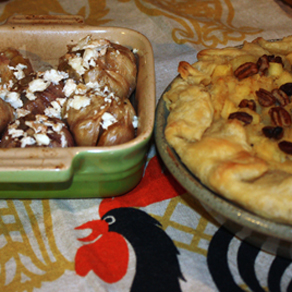
But sometimes I like to gussy it up a bit. This is how I served tonight’s garlic, with a humble parsnip pie to accompany it. A glass of Sangiovese, some Tetzner’s cinnamon ice cream for dessert, and our good friend Jim to share it all with made it a November meal to be proud of.
Fancy-Pants Baked Garlic
whole heads of garlic
butter
vegetable or chicken stock
wine (I prefer to use white, but since we rarely drink it, I often use red)
coarse salt
fresh ground pepper
bleu or feta cheese
Clean most of the outer papers off of how ever many whole heads you’d like to bake and trim away any dirt from the root end. Use a sharp knife to trim the very tops of the bulbs off, leaving the tips of the cloves exposed. Put the heads in an appropriately sized oven proof dish with a lid and add a little broth and a splash of wine. You want enough liquid in the dish so the heads are about half covered. Dot each head with a small pat of butter, and sprinkle with coarse salt and pepper. With the lid on, bake the garlic in a 325º F oven. As the garlic roasts, periodically baste the garlic heads, spooning the broth into the center of each head. When the garlic is soft and aromatic (about a forty five minutes to an hour depending on the garlic) remove from the oven and crumble a handful of good bleu or feta cheese over the heads. Replace the lid and let it sit for about 5 minutes. Serve the garlic, broth and all, with plenty of good crusty bread. Be sure to soak up some of the luscious broth along with the garlic. This makes a great appetizer or side for any fall or winter meal. Any left over heads (yeah, right) can be refrigerated and added to soups or sauces for extra flavor.

bring it!

One has to admire the sturdiness of a garlic clove. That it prefers to spend its winter wrapped in a shall of frozen soil is beyond my line of thinking. Why not hang out in the dark cool pantry for the winter months and bide yourself some time? I could plant you in the spring – on one of those glorious drippy late March days. But with the exception of only the smallest cloves, anything lingering past February is generally a sad shriveled site.

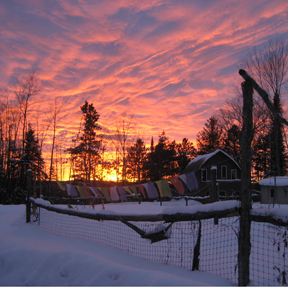
I’ve always considered myself a winter person. Sort of. I ski. I walk the dog. When the snow is right I populate the garden that I know is under there somewhere with snowmen. I do my best to get out. Some of the most spectacularly stunning days occur in winter. And the January sunsets off our western ridge typically set the sky aflame.

But to say I wrestle with the cold is putting it gently. I’m cursed with poor circulation. This past August I stood in front of an infrared camera on a 90 degree day and the large screen it was projecting onto turned a remarkable shade of blue. So on these fall mornings when my bare feet go numb after even the shortest of journeys outside, I literally cringe at the thought of the ensuing winter.

But these are also the days where the mid-day sun warms the soil up just enough to tease me back outside. I’ll just put in one more row, I reason. After all, if a 2 inch clove of garlic can bare the brunt of our Wisconsin winter, then so can I. “Bring it!” I say – as I march triumphantly inside to warm up by the wood stove.


instapig

No Instagram images were found.